


Introduction
Every now and then, something believed resolved in constitutional matters slips back into view. This time, lawmakers stirred what judges had seemingly laid to rest. The new Transgender Persons (Amendment) Bill marks just that turning point. Not only does it adjust prior rules, yet it drags forward a core matter the Supreme Court once settled clearly in National Legal Services Authority v. Union of India. At its heart lies a basic query heavy with impact - can gender identity be decided by legislation at all?
Over ten years, the Constitution seemed settled on this point. Dignity included who you are, including your sense of gender - not up for debate by others. Courts began seeing identity as yours alone, not something officials must approve.
Yet now, new changes bring back gatekeepers. Approval flows once again through government channels, reshaping what self-determination meant. Far from a small adjustment, this change reshapes the legal view of who we are. Identity now stands differently under the rules - rewritten at its core.
One reason this moment stands out lies in how institutions interact. Because Parliament stepped into an area defined earlier by court rulings, doubts appear naturally about where laws can go. That line gets questioned again now. Yet deeper scrutiny follows too - on whether basic rights stay strong when new rules remake their shape later on. Here comes such a look, pushing past first impressions to weigh what the change means legally, operationally, constitutionally.
Recognition Then Regulation Shaping Law
Out of left field, progress for trans people in India has zigzagged more than marched forward. A turning point landed in the NALSA verdict - suddenly, gender wasn’t brushed aside but placed at the heart of what the Constitution owes everyone: respect and fairness. From that angle, choosing one’s gender emerged as something deeply private, tied to freedom over oneself. Suddenly needing surgery or government nods felt less like procedure and more like an intrusion on basic freedoms.
One reason the ruling stood out? Sharp thinking cut through old assumptions. Not biology alone shapes who someone is - this idea took center stage. Backed by rights tucked in Articles 14, 15, 19, and 21, gender identity gained stronger footing. Suddenly, it wasn’t just politics - it became protected ground. Lawmakers moving forward would find their steps shaped by this line drawn deep.
Identity showed up in law books yet stayed tangled in red tape. Though shields went up for transgender people under the 2019 act, gates remained locked behind official stamps. Promises stood tall - approval processes quietly undermined them. What looked like progress at first glance bent when tested by real lives. Paper rights do not always breathe freely outside parliament.
A twist in the rules deepens the clash. When self-choice gets watered down or erased, power tilts away from personal freedom toward authority's grip. What once followed the spirit of NALSA now feels like a step sideways - progress dressed as change might just be retreat wearing a new face.
Understanding the Amendment
What stands out in the amendment isn’t any single rule tweak, instead a quiet shift in how law thinks about personhood. Identity once simply existed, now it has to be confirmed by systems built to measure its legitimacy.
This change hits fast. Right away, the character of the right shifts. When a right needs acknowledgment, it stops being absolute. Meeting paperwork rules starts to decide whether it stands. Now there's a new level of judgment where none was needed before. Because officials now control access to who you are, their decisions weigh heavily on daily life.
Here’s the odd part. Identity does not sit well under tests you can measure or prove like paper trails might suggest. Paperwork may confirm a name on a list, yet still miss who someone truly is. When systems treat it like just another step in a process, something intimate gets flattened into routine stamping.
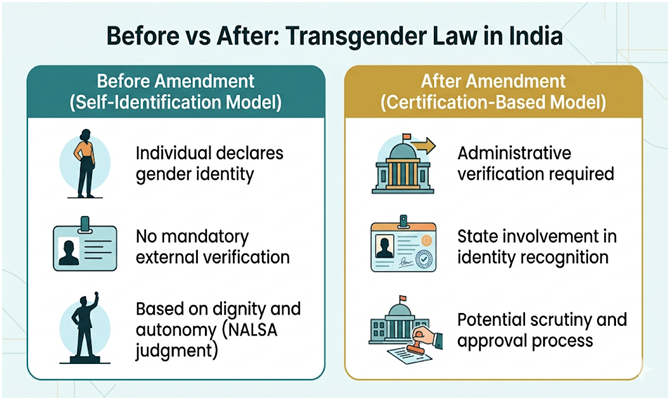
Real effects show up fast. People bump into them daily while moving through the system. Late responses pop up, rules shift without warning, unfairness slips in quietly. A guarantee starts feeling like something you have to bargain for instead.
Autonomy Dignity and State Power
Right away, the change shakes up how rights are seen under the Constitution. Sitting deep within this matter is Article 21 - courts have said it covers dignity and control over one’s own life. Because gender identity was affirmed in the NALSA ruling, it belongs inside those protections naturally. So when outside approval is demanded, strong reasons become essential.
Things get trickier with Article 14. Requiring transgender people to complete extra steps for legal recognition creates unequal treatment. Because of that, there needs to be a logical reason tied to a valid goal. Yet the revised law fails to state what that goal might be. Without clarity, its place under the constitution feels shaky.
Out here, Article 19 shifts the ground again. Speaking through who you are counts as speech just like words do. When limits hit that kind of expression, they better fit the situation - no more than necessary. Power handed to officials over how people show up in daily life might already go too far. Especially if it changes the way someone stands in front of others.
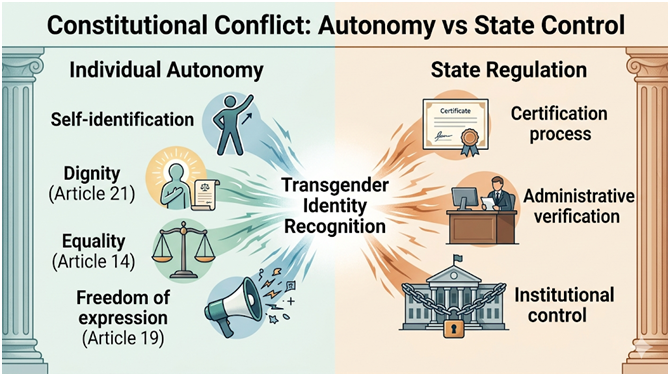
What happens when these rules come together? The change could face legal questions. Saying it helps management won’t cut it for the government. There has to be proof - proof the limits make sense, fit the problem. Showing that might turn out harder than expected.
Administrative Consequences
What happens after the change isn’t always clear at first glance. Tying personal status into official systems creates ripple effects deeper than just paperwork approval.
Starting off, administrative setups run on step-by-step methods. These steps always bring along duration, room for choice, because judgments must be made. Where such processes meet a core thing like who someone is, confusion tends to show up. People might wait longer than expected just to be acknowledged, since rulings differ across cases while support stays hard to reach.
Besides, some agencies lack the ability to manage identity matters well. When officials aren’t prepared, responses may come across as careless or misinformed. Mistakes like these stick, shaping lives in ways that linger long after the decision is made.
Those pushed to the edges face the hardest climb through this setup. Trans people often find doors closed when seeking official help. Extra steps piled into the process widen the gap, turning rights harder to reach instead of easier. Reaching fairness becomes a longer walk with each added rule.
The Constitution Is Supreme Over Laws
Looking at it differently, the change needs testing against the rule that the Constitution stands above all else. Once the top court reads the founding document and says a right exists, its word holds firm. Any law passed by lawmakers to undo that won’t stand unless it clears strict constitutional checks. Only then does it survive.
Not just reading a law, the NALSA verdict laid down a core idea tied to basic rights. Shifting from letting people define themselves, the new change seems at odds with that stance. A deeper problem emerges - how far can lawmakers go? The court once drew a line; now it feels crossed.
Should lawmakers gain power to adjust rights courts already treat as essential, confidence in lasting legal meaning begins to fade. Precedent holds weight not just because patterns matter; its strength lies in keeping foundational rules above shifting laws. When elected bodies override settled rulings, something deeper than policy shifts - it unsettles the order of authority.
A twist in the rules now hangs in uncertainty. Whether courts step in might hinge on how well it fits within past rulings. Survival of the change could come down to alignment with what justices have already set. Should gaps appear, action by judges would follow without delay.
How Rules Slowly Limit Freedoms Over Time
What stands out in the amendment isn’t bold rejection - it’s how process quietly shifts what rights mean. Recognition slips away when tied to paperwork hurdles instead of affirmed outright. The power lies not in refusal, but in making access depend on steps that feel routine yet narrow possibility.
What feels like just a formality might actually block access. When signing up becomes a maze, rights start slipping away. Picture checking who you are turning into an ordeal - suddenly the steps themselves shape what's allowed.
Now imagine changing how a right works just by adding steps. That is what happens here. Instead of simply belonging to everyone, the right now depends on meeting certain conditions. Suddenly it feels less like a guarantee. Problems appear under scrutiny. The Constitution frowns upon sneaky ways to weaken rights. Indirect cuts count too.
The real problem isn’t whether there’s a process, but what it does. When that process limits someone’s right, it should face just as much examination as an outright ban. That kind of close look creates the biggest hurdle for the change. What matters most shows up when outcomes block access. Scrutiny follows impact, not form. The rule shift stumbles at this point.
Federal And Institutional Issues
Out here, where no single office runs things, problems pile up fast. When it comes to proving who you are, each area handles it differently - some better equipped, others less so. How well it works depends on where you happen to be.
Now imagine one rule playing out in uneven ways. Where you live decides how it applies, which feels off when fairness is the goal. Protection slips through fingers when systems handle things their own way. Results shift like sand, making trust in consistency hard to hold.
It's about who does what. When it comes to figuring out who someone really is, government agencies aren’t built for that job. They know how to apply rules, follow procedures - less so how to weigh lived experience. Handing them this task means asking them to do something they’re not set up to handle.
Inside these systems, identity gets built right in - shifting how much power states can reach. Not just people feel it. The rules meant to protect freedoms start bending under new weight. Hard to measure where one part ends and another begins.
The Chilling Effect of Laws on Exercising Rights
What happens when rules around identity go too far? People start holding back. Not just in speaking up - though that's part of it - but across many rights they're legally entitled to. Fear of red tape, unclear steps, or facing penalties quietly pushes them away. Even without outright bans, the pressure builds. This version of the amendment feeds right into that pattern. A quiet retreat replaces open exercise of freedom.
What's at stake isn't just having a procedure. It's how that procedure feels, how it's seen. Reaching out to officials to confirm something deeply private - like one's own sense of gender - can open up risk. This goes beyond forms handed in or rules followed. Sharing who you are happens within structures that might lack care, even awareness.
What stands out grows heavier against India’s wider societal backdrop. Trans people there regularly face settings soaked in shame, isolation, and financial neglect. Dealing with official systems, under these conditions, tends to feel overwhelming. Being turned away, stalled, or mocked - that kind of dread hits close to real. Real life shapes it. When identity recognition gets built into those systems, the change might make that worry grow.
That quiet pressure lives where rules meet real life. Though the system might seem fair on paper, what happens in practice can scare people off trying at all. One setback pulls others along with it. Missing official status means doors shut to things like medical care, school, work, or support payments. Papers open those doors. If getting papers feels out of reach, so do the promises they carry.
What happens when rules look good but are hard to use? Just having a law does not mean people can reach it. Ease of access shapes how strong a right really is. If getting to a right feels like walking through thick mud, then it acts smaller than written. Reality bends the rule, even if the constitution doesn’t blink. Meaning matters more than words on paper, the Supreme Court says again and again. When changes make people hesitate before claiming who they are, something goes wrong. Real rights cannot exist only in theory. Conditions that block access turn guarantees into empty promises. What looks like freedom might not feel like it at all.
Identity Remains Fixed by Constitution Not Changed by Administration
What people argue about isn’t just rules versus freedom. Efficiency pulls one way, personal choice the other - that’s how most see it. Yet this split doesn’t show what truly matters underneath. Not really about weighing both sides. More about whether who you are can even be decided by paperwork and policy. Identity - can it belong in forms and files? That’s the quiet center no one names.
What lies beneath constitutional law, especially following National Legal Services Authority v. Union of India, shows a clear stance on this point. Far from being tucked away at the edges of legal protections, identity sits right at the core. Without it, those rights begin to lose shape. How people meet the law, their place within it, their standing for benefits - these hinge on identity. Seen only as a paperwork exercise, its deeper role gets missed entirely.
Identity slips into a box labeled proof when seen only through checks and stamps. What feels like order from afar starts blurring up close. Procedures gain sharp edges while meaning gets thin. Mistaking paperwork for truth shapes rules that miss the point entirely.
What happens when identity shifts like sand? Rights built on such ground start to wobble. Recognition by officials might shape who you are in the system, but that same act makes your entitlements depend on approval. When permission comes from above, people find themselves climbing ladders set by others. Power tilts where paperwork decides personhood.
Right up against what NALSA stood for - that’s where this idea lands. Not just spotting transgender lives but seeing their weight, the court moved further. People get to name who they are, it said. Far from being optional, this stood firm on core belief. Dignity draws breath only when self-definition is allowed room.
Now the discussion turns away from paperwork issues toward core legal roots. Instead of seeing the change as just procedure, it shows a deeper break from long-held ideas. What happens next could reshape how freedom choices are handled down the road.
How Past Rulings Shape Personal Freedom Legal Principles
What slips under the radar sometimes are how rule shifts in one area ripple into others. Though aimed at gender identity, this update drags along worries reaching far past its stated aim. Suddenly, traits once seen as private choices now need official thumbs-up before they count.
This opens space for rules to slowly stretch into more private choices. Should who you are require proof, then why not how you love, who you trust, or what you think? These shifts might take time, yet the reasoning behind the change makes them easier to justify later. What begins narrowly could widen without notice.
Nowhere has the shift been clearer than in India’s courts lately. Right to privacy rulings began shaping a new path. Personal choices matter more today because of how judges now see liberty. When someone decides their own way of life, court support tends to follow. What stands out is how dignity guides these judgments. Limiting government reach into private lives became a quiet priority. One case at a time, autonomy gained ground.
Now things veer off course. Once again handing power back to authorities over who someone is - that changes the game. Courts might start seeing freedom differently, not just here but everywhere. What begins with one group could spread without warning.
A fresh look at doctrine shows strain in constitutional principles. Still, past rulings highlight self-direction and worth. Yet recent laws push for tighter control. Balancing these needs thoughtful court involvement. What comes next affects more than transgender freedoms - it touches the core of individual choice.
Judicial Review and Levels of Scrutiny
One thing seems clear: the amendment has sparked constitutional questions, so a court look is likely. Still, what really matters isn’t if judges step in - it’s how they choose to examine it. That shifts attention toward which test they’ll use when judging its fairness.
Now comes the point where courts look closely when basic freedoms are at stake. Especially if dignity or personal choice stands challenged. Lately, top judges lean on weighing outcomes rather than strict rules. They ask whether a law targets a valid public goal. Does it actually help reach that goal? Could something milder do the job just as well? Then checks if the cost to individual freedom matches what the government claims to gain.
Right off, using this model on the change brings up tough questions. For one thing, the government has to explain exactly why it wants to run ID systems directly - something more than just making paperwork easier. That kind of efficiency alone probably won’t cut it. Supposing they do name a valid reason, then comes the next hurdle: showing their methods aren’t too heavy-handed. Balance matters, even when goals seem justified.
Here’s where things start to wobble. Introducing certification steps plus extra paperwork could come across as too much, given there are simpler ways forward. Take self-reporting models - pair those with checks to prevent abuse - and you still get clear records while leaving room for independence.
Facing new choices, the courts must weigh how the change plays out in real cases. Earlier talk showed fear of silence and uneven enforcement - those worries stick around. Instead of fading, they grow stronger when fairness gets tested under pressure.
How the courts link the change to current constitutional ideas will decide what happens next. Central to this is the earlier ruling in NALSA, along with long-standing legal views on self-direction and human worth. What judges say might reshape how far lawmakers can go when adjusting rights already protected by the Constitution.
Conclusion
A shift happens when laws like the Transgender Persons (Amendment) Bill appear - not just new rules, yet echoes of deeper tensions. Questions rise, ones tied tightly to how people stand within a nation's frame. What feels like policy on paper becomes something else: a mirror held up to power, identity, belonging.
One layer deals with how people see their gender, along with what trans folks are entitled to. Beneath that lies something heavier - what rights actually mean. Do they exist just because someone is human, or do they need approval from the government to count? That choice won’t just guide court rulings here - it’ll ripple through India’s entire legal future.
Nowhere does the shift seem clearer than in how identity gets shaped more by government than personal choice. That setup sits uneasily with past rulings from the top court. Without warning, real-world effects could weaken how people actually use their rights.
Nowhere else does the tension surface so clearly as here, where two ways of seeing the Constitution collide. Personal freedom, self-worth, and private decisions shape one view. Stability, rules, and authority define the opposite. That scale rarely sits level. This change pushes hard on its edges, impossible to ignore.
One way forward means courts must look closely. Public talk needs to catch up, yet stay grounded in facts. Laws might need another look, but only after real discussion. Simply stating an answer changes nothing. The heart of it ties back to how constitutions are understood when pressure builds.
A principle's survival hangs in the balance, not just how one law gets read. Shifting personal identity into bureaucratic hands could ripple through areas well beyond this case. Should self-choice be backed once more, dignity and independence gain firmer ground in constitutional thought.
This moment isn’t an ending - it’s a turning point. Whichever way they go shapes more than just transgender rights across India; it bends the soul of the Constitution. Choices echo beyond laws.
Join LAWyersClubIndia's network for daily News Updates, Judgment Summaries, Articles, Forum Threads, Online Law Courses, and MUCH MORE!!"


Tags :Others


