Case Title
The Bandra Holy Family Hospital Society & Anr. v. State of Maharashtra & Ors.
Date of Order
17 November 2025
Bench
Hon’ble Justice A.S. Gadkari
Hon’ble Justice Ranjitsinha Raja Bhonsale
Petitioners:
1.Bandra Holy Family Hospital Society (a public charitable trust)
2.Bandra Holy Family Hospital (acting as “temporary guardian on Good Samaritan basis” for the patient)
Respondents:
1.State of Maharashtra (incl. police authorities)
2.Senior Citizens / Maintenance Tribunal
3.Mr. Amit Puri, son of the senior citizen (the patient)
Counsel / Advocates:
•For Petitioners: Mr. Pradip Chavan (Advocate)
•For Respondents: Dr. Birendra Saraf (Advocate General), Advocate Gauri Joglekar (for the son / other respondents)
SUBJECT
The case is about the abandonment and neglect of a 76-year-old senior citizen (Mrs. Mohini Puri) who was admitted to a charitable hospital. Her son, the only child, is said to have refused to take her home after the treatment, left a significant portion of the medical bills (~₹16 lakh) unpaid, and generally, refused to take the responsibility. As the hospital is looking after her temporarily, it filed a writ petition requesting the court’s intervention: to secure her maintenance, protect her property, and instruct the State / Tribunal to take action as per the provisions of the Maintenance and Welfare of Parents and Senior Citizens Act, 2007 (the “Welfare Act, 2007”). The bigger issue was whether the child’s statutory duty under the Act depends on possession of the property/inheritance or if it is an absolute duty — and what remedial/protective powers become available if the duty is violated.
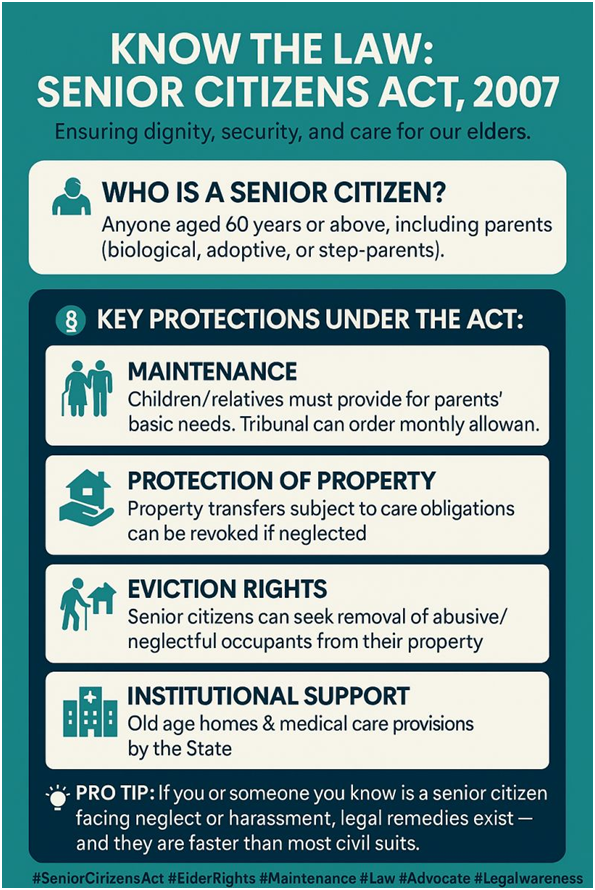
IMPORTANT PROVISIONS
The key points from the law that were discussed include:
Section 4, Maintenance and Welfare of Parents and Senior Citizens Act, 2007 the section that legally establishes the absolute and unqualified duty of children to take care of and support their elderly parents. This is a duty that is inherently theirs and is not contingent upon them receiving an inheritance or the possession of parental property.
- • Section 5, Welfare Act, 2007: giving the Maintenance Tribunal the authority to recognize neglect or abandonment as a matter of its jurisdiction and also to act suo motu in cases where a senior citizen is unable to personally come to the Tribunal.
- • Section 22(2), Welfare Act, 2007: the provision of the State's obligation to create and carry out an impact plan that ensures the protection of senior citizens' lives, dignity, and property, and among other things, making sure that law enforcement and administrative officials are responsive to such matters.
- • Section 23, Welfare Act, 2007 : the empowerment given to the Maintenance Tribunal not only to revoke the conditional property transfer clauses but also to go beyond issuing protective property-related orders such as controlling the misuse or illegal sale of the senior citizen’s assets if neglect or abandonment has been confirmed.
- • Section 24 and Section 25, Welfare Act, 2007: the definition of the act of abandoning a senior citizen as an offence punishable by law, and the description of the proceedings as being cognizable, bailable, and eligible for summary trial
- • The corresponding measures in the Rights of Persons with Disabilities Act, 2016 (Sections 2(s), 2(za), 6, 7, 12, and 13) : These measures were mentioned to highlight that the elderly who are medically disabled or have neurological impairments, are significantly more vulnerable, and thus, the authorities, in turn, have the obligation to prevent their being abused and to facilitate their access to justice.
- • The Maharashtra Medicare Service Persons and Institutions (Prevention of Violence and Damage or Loss to Property) Act, 2010: The provisions in the Act were introduced in the situation where the doctor, along with the hospital personnel, were being accused of being hostile and obstructing the patient's treatment and discharge process.
OVERVIEW:
FACTS
On 24 August 2025, Mrs. Mohini Puri, aged 76, was admitted to the Bandra Holy Family Hospital after she had a stroke acute right middle cerebral artery (MCA) infarct. She was weak, severely malnourished her weight was only 45 kg, and in a very fragile condition. Therefore, she was treated in the ICU and later in the wards. Medically, by the beginning of October 2025, doctors from the treating team declared her stable and fit for discharge.
What happened is that her only son (the respondent) had initially paid part of the bill (₹4.25 lakhs) and then he refused to pay the substantial outstanding dues (≈ ₹16,00,000) and to take her home. Talking from a different point of view, he fabricated a medical negligence scenario, demanded the original case papers, demanded a second opinion, and by being aggressive and harassing hospital employees, he conducted his activities. Moreover, he was not willing to work with the authorities, he skipped the summons, and also when the Court issued summons, he was absent.
The hospital, being a charitable trust, was not able to continue the care that was indefinite. As a result of the severity of the patient's abandonment and her vulnerability, the hospital on the Good Samaritan principle filed a writ petition in the High Court, thus seeking: (i) a police directive taking her to her home / a government hospital; (ii) action under the Welfare Act; (iii) protection of her property from the son’s misuse; (iv) other directions relating to her maintenance and care.
Procedural Posture
The petition was filed under writ jurisdiction (Criminal Writ Petition). The case called for an emergency intervention due to the patient's medical condition, neglect, and hospital refusal to provide further care without payment. The Court framed issues regarding duty under the Welfare Act, protection of property, and involvement of the State machinery.
ISSUES RAISED
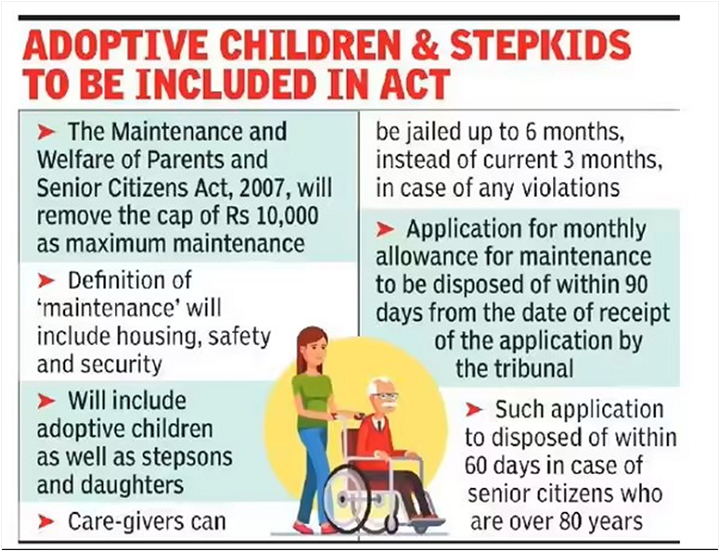
- Under Section 4 of the Welfare Act, is the statutory obligation of children to maintain their elderly parents an absolute one, without any conditions, or is it conditional on the ownership of property / expectation of inheritance?
- If a person refuses to take discharge, does not pay dues, and does not provide home care, can it be considered as “abandonment / neglect” under the Act, thus resulting in consequences (including penal ones) for the child?
- What are the Maintenance Tribunal’s authorities under Section 23 if the condition of abandonment of a senior citizen by the family is established especially, whether it can issue protective orders to secure the senior citizen’s property from loss, prevent dissipation, or eject the negligent child / relative?
- Whether the State authorities (police / Tribunal) have the duty to intervene suo motu or on complaint, and whether their inactivity in itself is a violation of the statutory duty as per Section 22(2) of the Act.
- Can a charitable hospital (or any third party acting as "temporary guardian") come before the Court under writ jurisdiction if the child, police, and Tribunal are inactive and the life or health of the senior citizen is in danger?
Arguments advanced by the respondent(son/state)
Counter-arguments, according to the press and the Court's summary, chiefly encompassed:
- Medical Negligence & Right to a Second Opinion: The son accused the hospital of hastening the discharge and asked for the original case papers and a second opinion; he argued that if the patient were to be discharged, her health might be endangered — therefore, he did not agree to take her home.
- Financial Constraint / Unwillingness to Pay Huge Dues: He said that he could not pay the balance of around ₹16 lakh due to the large total of the bill.
- Procedural and Legal Complexity: He, through the lawyer, indicated that the issues medical negligence claim, documentation, second opinion constituted a legitimate reason for delay/refusal. Besides, the involvement of other forums (Human Rights Commission, other complaints) was predicted thus, the issue was being shifted from maintenance to medical dispute.
- Challenge to Hospital’s Action: Hospital implicitly held the view that it should not unilaterally take over guardianship, or bypass civil hospital arrangement, or force discharge especially given serious illness and alleged medical negligence concerns. The Court did not, however, accept these contentions entirely.
JUDGEMENT ANALYSIS
1. Statutory Duty Confirmation of an Unconditional Obligation
The main support of the judgment is the confirmation that under Section 4 of the Welfare Act a child's duty to maintain a parent is absolute, unconditional, and natural, it is not dependent on property rights, inheritance, or possession. This point is very important as a clarification because there has always been historical ambiguity: the definition of “relative” (versus “child”) under the Act referred to maintenance being dependent on property possession. The Court differentiates clearly: the obligation of relatives may depend on property, whereas the duty of a child is a mere birthright.
By this move, the Court eradicates the line of reasoning by which children might claim that they are not obliged to provide maintenance if they are not the inheritors or if the property is in dispute. The only relevant factors are still and only the ability and the responsibility. This makes a solid precedent.
From a jurisprudential angle, this interpretation is consistent with the wider goal of the Act is to deliver “effective” maintenance and welfare, and to guarantee that the elderly are not left without support. Moreover, it adopts a welfare statute-friendly interpretative approach: a beneficial act should be interpreted liberally, taking seniors’ side.
2. Abandonment / Neglect as a Breach Leading to Remedial Measures
The Court thoroughly examined the facts and concluded that the son's behavior was abandonment / neglect: the son’s refusal to take discharge, refusal to pay dues, refusal to arrange any home care, hostility towards hospital staff, and the absence of any credible plan for the mother’s care. The law treats such abandonment most emphatically — hence, this is the precise issue that the Act covers and from which it provides the necessary solutions (maintenance orders, property protection, penal consequences).
The judgment, therefore, does not accept any justifications that are based on the alleged medical negligence or demand for a second opinion. The Court noted that such issues should be dealt with separately; they do not give the child the right to suspend or avoid maintenance obligations.
From a social-justice point of view, this is quite substantial: it is a measure against using medical disputes improperly to hide from one’s responsibilities. The older generation’s care and respect should not be put on hold because of court battles.
3. Expanded Role of Maintenance Tribunals Property Protection under Section 23
The interpretation of Section 23 of the Welfare Act by the Court is one of the major legal changes from the judgment. The Court decided that Section 23 even if it is a case without a conditional transfer of property gives the Maintenance Tribunal the authority to issue the protective (restrain sale/transfer, evict neglectful child, preserve estate) when a senior citizen is abandoned or neglected.
It is a significant extension of the protection under the Act. By tying property protection to maintenance obligations, the Court makes sure that senior citizens still have the means of support and that the children cannot waste or dispose of their assets to escape their liabilities.
Besides that, the Court acknowledged that welfare laws should be interpreted more broadly and that protective orders, such as restraint orders, are “incidental and necessary” for the enforcement of the maintenance right in its full meaning, not in a limited sense.
Basically: the tribunal’s power to bring about a remedy is not confined to financial allowances or simple maintenance, it covers economic security and estate protection of senior citizens for the long term.
4. State and Police Obligations (Accountability of Public Authorities)
The decision condemns the police and the Maintenance Tribunal for their silence and inaction and points out that such inaction goes against the very spirit of the Act. The Court saw that the State, according to Section 22(2), is obliged to provide a detailed plan of measures for the protection of life and property of senior citizens.
By the son’s failure to take discharge / home care, the Court, through the State, makes it clear that if welfare responsibility cannot be transferred to private parties when the child leaves.
It is an important precedent regarding the State’s accountability: in case of neglect or abandonment, public authorities cannot be indifferent. Their constitutional and statutory obligations come into play.
5. Locus of Third-Party Guardians: Hospitals & Institutions Can Seek Writ Relief
The court’s recognition of the role of a charitable hospital as a "temporary guardian on a Good Samaritan basis" is another significant point of the Court’s argument particularly when the child, police, and Tribunal are inactive, has the legal right to come to the High Court under writ jurisdiction.
It is very important because it acknowledges the real situation: that elderly persons might be left in hospitals, particularly charitable ones, and if no third party intervenes, they may be left without rights, in poverty, or suffer continuous neglect. By allowing such third-party writ petitions, the Court creates a safety valve, thus welfare statutes are not at risk of becoming inactive in real-life situations.
6. Human Dignity, Right to Life & Health Under Article 21
Much of the Court's decision was based on constitutional values, especially the right to life with dignity (Article 21) and the rights to health and medical care and to a life worthy of human dignity.
The Court, by its decision, has connected welfare laws to constitutional values, thus it conveys a message that law, like the Welfare Act must be interpreted in a wide, liberal sense in order to discharge its social purpose.
This is in line with the broader Supreme Court jurisprudence (e.g., on right to health, dignified living for marginalized/elderly persons) although the Court does not explicitly refer to a single apex-court decision here. It rather chooses to emphasize the statutory purpose and social morality.
Viewed from a socio-legal perspective, this method reminds that moral-legal covenant is the debt society has towards its vulnerable elders.
7. Broader Significance: Reinforcing Social Solidarity & Elder-Care Norms
The Court's decision is of great social significance in the present-day India with the rise of nuclear families, migration, elder-care problems. Reiterating that maintenance is a birth-right and a duty, not a negotiable barter linked with property, the Court thus brings filial responsibility back to traditional values in the statutory framework.
On the other hand, the judgment, by giving Tribunals the authority to protect properties, the State/police the power to take action, and the permission for the third party to intervene, creates strong institutional mechanisms for the care of elderly people.
Consequently, the ruling may serve as a source of strength for elderly people who, particularly, do not have an active family going against the threat of their abandonment and the possible intervention of the family.
8. Legal Commentary & Scholarly Interpretation
Online legal commentary platforms and professionals have consistently interpreted the court decision as a major revitalization of the Welfare Act’s intent. For instance:
- One piece of analysis states that the ruling “finally settles the longstanding confusions of the issues of maintenance by way of concealment of lack of property or inheritance expectations.”
- Another article points out that the protective range of Section 23 has been herewith widened to cover the safety of the elderly's property and economic rights during the period of neglect/abandonment a change that is very likely to have a significant impact on future maintenance/eldercare-related court cases.
- Media reports have underlined that the Court's move “saved a fragile 76-year-old from the nightmare of homelessness/destitution,” and sent a strong message to children that legal obligations cannot be compromised.
In the words of a lawyer-blog: “if the system and public authorities fail, even hospitals or NGOs should be permitted to intervene a litigational safety valve is a writ petition.”
EXPERT OPINIONS
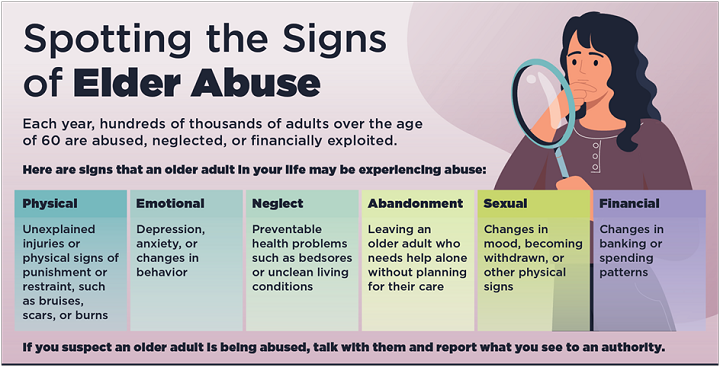
Practising advocate Pratham Kindra says :-“When I look at this decision from the perspective of a lawyer, I see it as an important landmark to reaffirm the legal and ethical rights of children towards their parents. Out of my personal experience, the senior movie disputes have the case when people take the duty of the older generation for granted or treat them as if these duties were dependent on the inheritance, property, or convenience. This ruling clarifies that these obligations are absolute and derive from the family relationship itself. The Court also found support for its position in the social realities of the Indian society in which the extended family structure has further eroded. I believe the Court was right in recognizing abandonment as not merely a private family matter but a violation of statutory and constitutional protections, particularly the right to dignity under Article 21.
I especially note that the Court has construed Section 23 in an expansive manner to provide more safeguards for the elderly in distress and empower the Tribunal to take prompt action in such cases. In my view, this decision has a broader social and legal significance, as it not only achieves justice in a single instance but also sets the framework of elder care as an indispensable element of human rights and the legal system as a whole.”
CONCLUSION
The Bandra Holy Family Hospital Society & Ors. v. State of Maharashtra & Ors. case is a landmark and forward-looking reading of the Welfare Act, 2007. The Court, through its ruling, has not only confirmed that a child's obligation to maintain parents is absolute but also that statutory consequences follow if there is abandonment. Moreover, the Court has facilitated the increase in the protective powers of the Maintenance Tribunals over property and has made it clear that it is the State agencies that have the onus of taking care of the senior citizens thereby enhancing the legal and social safety net for the elderly in India.
Jurisprudentially, the verdict is in favor of the purposive, liberal, and value-based interpretation of welfare statutes which should be in line with the constitutional principles of dignity and life. From a societal point of view, it is a loud and clear message that elder care is not up for negotiation and that institutions have to be there if the family fails.
In the future, this case is probably going to be a fundamental reference point for court cases and elder-care law. It will be the standard that keeps the assertion of care from being mixed up with disputes over property or financial excuses; maintenance tribunals will be vested with a broader remedial authority; and courts will accept the involvement of third party / intermediate entities as legitimate.
On top of that, the verdict conveys a loud and clear moral message along with the legal proclamations: An old life left in the ICU without any help is not only a personal tragedy, it is a failure of the society. The law, equipped with its empathy and strength, has to intervene.