
The Allahabad High Court's ruling in Shatrughan Kumar v. NCB closes a long-standing gap between how special courts took cognizance and what the new criminal code now demands
Meta Description: AI tools can generate a brand name in seconds — but Indian trademark law doesn't care how a name was made. Learn why AI-generated brands are fuelling the next wave of trademark litigation and what you must do before you launch.
Meta Keywords: AI generated trademarks India, trademark litigation India, AI brand names legal risk, Section 138 trademark infringement, Cadila Health Care trademark, consumer confusion trademark India, trademark clearance search India, prior use trademark India, NI Act trademark, NDPS trademark, pari materia trademark, AI branding legal issues, Trade Marks Act 1999, Nice Classification India, trademark registration India, deceptive similarity trademark, Whirlpool trademark case India, Parle Products trademark, trademark attorney India, brand name legal clearance
One quiet step shapes each criminal trial long before names appear on dockets. Before anyone receives notice, even before charges show up in records - there it sits, unseen. A judge reads something serious one afternoon. Not quite proof, but enough to stir thought. Pages land on a desk. The ruling comes quietly: these claims deserve attention. No fanfare marks the start. Just paper, ink, and someone far away deciding what counts.
Back then, under the 1973 criminal rules, this step happened without saying much. After reading the complaint, the judge looked at what evidence came forward. Depending on that review, they chose whether to start proceedings. At no point did the person charged join the call. News of it reached them later - by summons or by warrant.
July 1, 2024 marked a shift. Out went the old CrPC, in came the Bharatiya Nagarik Suraksha Sanhita, 2023 - bringing along Section 223. This new clause slips in something small but significant into prior process. Before taking up a complaint, courts now need to hear the accused first. A move once made without warning now requires presence, if only on paper. Once top-down, the step opens slightly, allowing room for voice.
Heavy silence followed when the Allahabad High Court spoke on May 21, 2026. From within courtroom echoes came Shatrughan Kumar versus Narcotics Control Bureau. Justice Brij Raj Singh shaped its meaning - Section 223(1) BNSS must guide every complaint, even those brought by the NCB under NDPS. Skip that moment before charging someone? Then what follows crumbles. Not just a misstep - it empties the entire act of starting proceedings. What looks like procedure turns into foundation. No formality survives without it.
What Section 223 BNSS Says and Why It Is Important
Now things become clearer if you look into what Section 223 of the BNSS brought in. That part stepped in where Section 200 of the CrPC used to stand, handling how magistrates check complaints early on. What stayed unchanged is this: whoever files a complaint gets questioned under oath once the court picks up the case.
Before any decision on charges, those accused now get room to speak - thanks to Section 223 of BNSS. Not just paperwork shuffle; this tweak leans toward fairer early-stage defense. Hearing the person first? That mindset runs deeper through the new system.
Right off the bat, the key change shows up in the first proviso under Section 223(1). While Section 200 CrPC skipped such steps, the BNSS insists on a pre-cognizance hearing for the accused. Far from being just routine, it carries weight. Where courts have weighed in, they’ve stressed substance over procedure - real chances to respond matter. Objections need space to land. Then again, the final order can’t act like the hearing never happened.
One way into the system opens under Section 223 of the BNSS - any individual may bring a personal complaint straight to a Magistrate. Should it seem fit, the Magistrate might send the case for police inquiry even prior to starting formal steps.
Now, unlike before, someone isn’t charged without their presence being acknowledged by the court. What shifts here? Judgment happens only after they are part of the picture.Whether rules meant just for everyday citizens also bind government bodies came up before the Allahabad High Court. Not limited to personal cases, the query touched filings made under strict laws like the NDPS Act. That point sparked a ruling shaping how drug charges begin across India. Outcomes now ripple through enforcement practices in ways few first noticed.
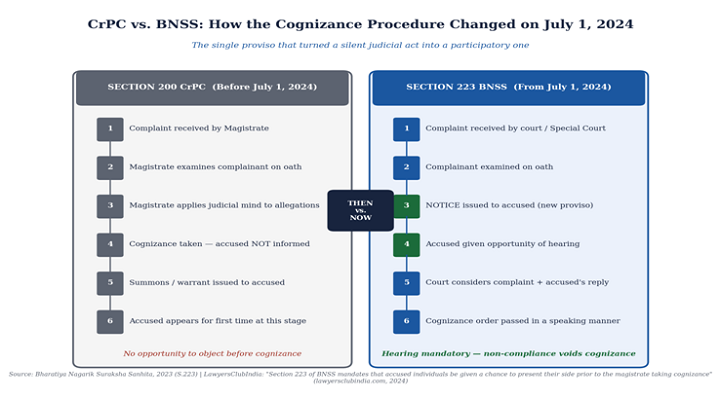
Figure 1: The procedural shift from S.200 CrPC to S.223 BNSS — how cognizance went from a silent judicial act to a participatory hearing
The Facts of Shatrughan Kumar A Complaint Filed in the BNSS Era
Right off, the details here sit clear even if they carry weight. A filing by the Narcotics Control Bureau landed on July 14, 2025 - aimed at Shatrughan Kumar. That timing matters more than it first appears. See, the BNSS started running July 1, 2024. Over a year passed before the complaint showed up. So any confusion about old versus new rules? Gone. By that point, Section 223 of the BNSS stood without doubt.
Nothing fuzzy. It applied straight away when the bureau moved.
A case began when the Special Judge under the NDPS Act in Lucknow reviewed a complaint, sending the accused into custody right away. That day, the court wrote in Hindi it had gone through the submitted papers carefully. Following this, formal charges came into place come August 8, 2025.
He questioned the decision to proceed, saying his chance to speak beforehand wasn’t real - something the law under Section 223(1) BNSS demands. Noticing it briefly in documents, claimed the NCB, met the rule just fine. Their point: because he stayed silent until after charges came through, he’d lost the right to argue later.
The judge turned down both points raised. What appeared in the disputed order showed no sign that a pre-charged review actually took place. There was no real chance offered to the person charged to submit counterpoints. Missing entirely was a detailed ruling showing those responses were weighed. When it came to giving up rights, silence alone could not fix what Section 223(1) required.
The Pari Materia Bridge Connecting PMLA And NDPS
Was Section 223 BNSS meant to cover complaints made under the NDPS Act? That stood at the heart of the matter. Special courts set up by the NDPS Act follow their own distinct procedures. Because of this setup, the NCB claimed regular rules from the BNSS shouldn’t interfere - nor should they pile on extra steps forbidden by such focused legislation.
Nowhere else does the law make such a clear path for direct filing. The courtroom looked closely at what Section 36A(1)(d) actually says within the NDPS Act. A Special Court can begin proceedings when an approved official files a report - no prior referral needed. That one rule lets the NCB bring cases straight into that specific court. Instead of going through regular steps, this clause opens another way forward.
Looking at how things are worded, the lawyer pointed out that this rule matches exactly with Section 44(1)(b) of the Prevention of Money Laundering Act, 2002. Though found in different laws, each serves the very same role within its own system. A nod was made to how either one hands power to an official body to bring cases directly to a Special Court. With these clauses in play, legal proceedings can start even when there has been no prior commitment of the person charged.
One rule helps make sense of another when laws look nearly the same. When court rulings explain a phrase in one law, that meaning often fits the twin law just as well. Because they mirror each other, decisions stick across both. What judges say about one ends up shaping how we see its counterpart.
This idea wasn’t new when the Supreme Court revisited it in Kushal Kumar Agarwal v. Enforcement Directorate. There, judges made clear: once a complaint arrives under Section 44 of the PMLA after July 1, 2024, Section 223 BNSS kicks in - along with the rest of Chapter XVI. Hearing someone before taking cognizance? That step can’t be skipped in money laundering matters.
Right after, the Allahabad High Court applied this logic to the NDPS Act. Because Section 36A(1)(d) under NDPS matches closely with Section 44(1)(b) in PMLA, they’re treated alike. So the new rule in Section 223 of BNSS now covers both laws equally well. Claims that the NDPS Act shields NCB filings from such rules didn’t hold up. Instead, consistency across procedures took priority.
NCB Claims Fell Apart
One reason stood out - NCB pushed it hard - but still fell flat when tested. Another point followed, similar in weight, yet judges set it aside just the same. Each had merit on paper, true, but real scrutiny stripped their strength bare.
One point raised was how the cognizance order included a note stating the court listened to the case. Inside it, the judge wrote in Hindi that every document got reviewed alongside hearing. According to the NCB, such detail met the necessary condition well enough.
Still unconvinced, Justice Brij Raj Singh saw things differently. Noticing paperwork isn’t the same as letting someone speak - that’s what the judge emphasized. What matters under the rule added to Section 223(1) BNSS is not if files were reviewed. It hinges on whether the person charged got a real chance to respond. Showing up wasn’t an option because nobody told Shatrughan Kumar he had to. A chance to respond never made it onto paper, let alone into his hands. The decision moved forward without so much as a note about opposing views. Silence replaced procedure at every turn. What should’ve been clear left only gaps in practice.
Later came the point about charges being set as early as August 8, 2025. Since the accused took part without questioning the court’s initial move before that day, their chance to object faded. That idea leans on estoppel, pulling from logic seen under Section 465 of CrPC. One example sits in the Kerala High Court decision involving Kannan and M/s. Adisiva Enterprises.
What set this case apart was how ignoring Section 223(1) BNSS isn’t something later actions can fix. Because the law demands a pre-cognizance hearing, skipping it strikes at the core of initiating legal process. Not just some slip in filing documents - this omission misses a key stage lawmakers required. Once missing, nothing done during trial afterward makes up for that gap. That sort of flaw stays, regardless of what follows.
The Supporting Chorus Patna and Calcutta High Courts
Not alone was the Allahabad High Court’s decision made. Three earlier rulings were mentioned by Justice Brij Raj Singh, pointing to a wider pattern in how Indian courts reacted when Section 223 BNSS arrived on scene. Each judgment added weight, not just standing apart but linked through similar reasoning seen elsewhere before. What unfolded was less about one verdict, more about echoes found in others across time and place.
Though the Supreme Court’s decision in Kushal Kumar Agarwal laid down the key rule for PMLA complaints, it leaned on earlier views too. From Patna, the Pushpraj Bajaj case against the Union of India had already shaped thinking. Then came the Calcutta bench weighing in through Tutu Ghosh versus the Enforcement Directorate, another piece fitting the puzzle.
Not many courts spelled it out like the Calcutta High Court did when explaining what happens without compliance. Back in Tutu Ghosh, judges said skipping a pre-cognizance hearing under Section 223(1) BNSS makes whatever comes after legally nonexistent. That wording hits harder than calling something just voidable. Missing the hearing isn’t framed as an error needing objection - instead, it wipes away legitimacy from every next step.
Now comes the part where routine excuses fall apart. The Patna High Court once said much the same thing under PMLA in Pushpraj Bajaj, insisting hearings must happen - no skipping just because someone claims it's urgent or easier. Three separate High Courts have each weighed in like this, their voices lining up neatly. Then there is Kushal Kumar at the top, a ruling from the Supreme Court that quietly stitches them together. What was firm in money laundering cases begins showing up again elsewhere - as if judges are copying not words but rhythm. This pattern does not shout; instead it repeats until noticed.
This part now replaces Section 200 of the CrPC, introducing a shift - before taking up any case, a Magistrate must listen to the person charged. As seen on lawyersclubindia.com in 2025, this marks a change where courts insist on early voice for the accused. Notably, the Allahabad High Court applied this idea directly to NDPS cases brought by the NCB, breaking new ground. It shows the approach isn’t limited only to financial crimes under PMLA but stretches further into drug-related charges too.
Impact of Ruling on NCB and Special Courts
One person’s legal outcome could reshape dozens of ongoing drug cases. When the Narcotics Control Bureau brings charges in special courts nationwide, timing suddenly matters more. Complaints arriving after midyear might lack a required early hearing step. Without that check, approval to proceed stands on shaky ground. Each delayed filing risks being questioned all over again.
When handling NDPS matters, Special Courts now follow a defined sequence prior to acting on NCB complaints submitted from July 1 onward. Notice reaches the accused first. A hearing date follows soon after. Objections, if any, come into play at that stage. These are weighed carefully by the judge. Only then does an explanation-filled decision emerge. Silence alone won’t do. The record needs proof - proof of presence, proof of voice heard. Pages scanned mean little unless voices speak through them. That is what makes it valid.
One way the BNSS speeds things up? It sets clear deadlines during investigations and trials. Hearing cases before formal charges now - yes, that slows initial steps - but fits how the system wants fairness early on. While longer upfront, it lines up with pushing rights forward, not back.
When someone faces an NCB complaint without getting a chance to speak beforehand, this decision offers a clear path to object. Even joining later stages does not fix that initial lack of access. Courts usually dismiss late claims about process errors, yet here such delays do not block review. If the person proves no real opening existed prior to the Special Court's action, then the foundation for overturning that step stands firm.
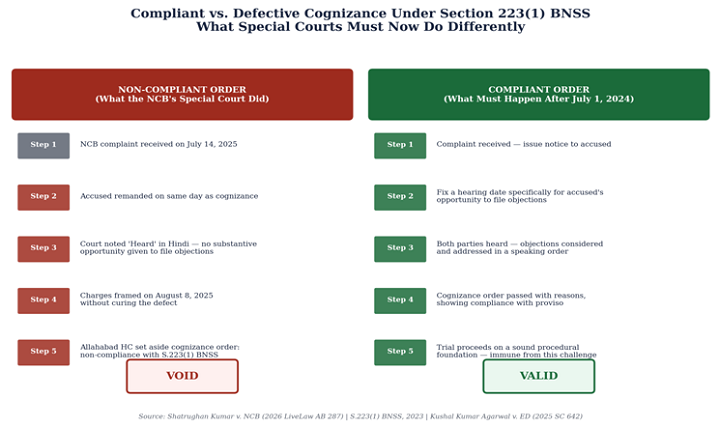
Figure 3: Compliant vs. defective cognizance orders under Section 223(1) BNSS — what Special Courts must do differently after this ruling
The Deeper Question of Special Statues and General Procedures
Nowhere is the clash more visible than in how everyday court processes meet strict legal exceptions. A decision by the Allahabad High Court stirs debate once again on this friction point within India’s justice system. Not procedure alone matters here, yet what happens when standard rules face unique laws.
Often these moments expose deeper uncertainty about balance. One rule applies broadly, another narrowly - trouble begins where they cross paths. This time, it is courtroom mechanics bumping into legislative intent.
Special laws have their own way of doing things. Not every rule fits neatly into one system. A specific section sets up unique courts plus how cases begin under this law. These steps do not follow the usual path found elsewhere. The drug control agency claimed such rules stand alone.
They said the framework works without needing outside procedures. What exists here was built to function apart. Newer legal structures should not insert extra steps where none are needed. Rules meant for common cases lose place when a separate design already covers it. This setup runs on its terms, shaped by what came before.
Nowhere does it say this stance held up, yet its failure matters. Not tied to one kind of case, the rule in Section 223 BNSS stands broad. Before moving forward, judges have to listen - that part applies every time. Forget thinking of it as extra; it belongs by default. Whatever unique rules the NDPS Act sets, fairness still roots beneath. Even then.
It makes sense when you look at similar laws together. Though they have a similar language, yet, one deals with narcotics, another with money laundering. After a high court decision linked one law to new trial rules, ignoring the other seemed odd. Even if laws are specific, they still follow updated procedures - unless stated otherwise. Not a single line in either act blocks those updates from applying.
Starting off, India's main tool for managing narcotics sits within the NDPS Act passed in 1985. This legislation hands power to officials allowing them to set up dedicated courts meant to speed up case handling. While these specialized setups exist, they do not float outside normal legal protections added later via the BNSS. Instead, newer safeguards still apply even inside those fast-track settings.
Things Accused People And Their Lawyers Need To Understand
Now comes a twist for defense attorneys dealing with NDPS cases - Shatrughan Kumar's judgment opens doors but also sets demands. Clear chance appears when facing NCB complaints past July 1, 2024, if no real pre-cognizance hearing happened. That lapse might unravel the cognizance move. Trouble brews where Section 223(1) BNSS’ first proviso stays ignored. Courts in Allahabad already back such challenges. Success waits for those who spot the gap.
Just as plain can be, the duty stands. When dealing with NDPS cases, defence lawyers need to look closely at the cognizance order if the case started after BNSS took effect. Because timing matters, they should see if notice came before cognizance. Often overlooked, but critical - was a hearing date set? While going through papers isn’t enough, did the court actually consider any objections raised? Without that, something’s missing. The judge’s reasoning must show how the pre-cognizance hearing played a role. If the order only says documents were read, and nothing else, it falls short.
People charged after their case began might find the court’s signal harder to pin down. In Shatrughan Kumar, judges didn’t say giving up rights always fails. What they said was: missing an early chance to respond before formal charges can’t be fixed later just by taking part, since it isn’t a small slip - it cuts deeper into process fairness. Yet outcomes could shift depending on context; real harm matters here. Each situation shapes how solid the objection stands when tested.
Speaking to LCI Advocate Sanjeev Tiwari stated that “If you are still practicing like it is 1973, you are going to get a rude awakening in the High Court. As we saw from the case at hand, the NCB thought they could just file a complaint and get cognizance under the NDPS Act while the accused sat in the dark. Not anymore. Section 223 of the BNSS is not just a suggestion and is a mandatory roadblock. You have to hear the accused before you take cognizance. If the judge skips that hearing, the entire proceeding is basically a ghost. It does not exist.
My advice? Check every cognizance order passed after July 2024. If there is no record of a pre-cognizance hearing, that is your exit door. Don't wait for the trial to fix a broken foundation. Attack the start.”
Conclusion: A New Default in NDPS Prosecutions
The ruling in Shatrughan Kumar v. Narcotics Control Bureau is not a narrow technical decision about one case. It establishes a new procedural default for every NDPS complaint filed by the NCB or any other authorised authority after July 1, 2024. The accused must be heard before the Special Court takes cognizance. This is now the law.
The ruling reflects the intent behind Section 223 BNSS. The legislature, in introducing the pre-cognizance hearing requirement, was not trying to burden Special Courts or slow down prosecutions. It was trying to ensure that the decision to formally commence criminal proceedings against a person is not taken entirely in their absence. The accused is entitled to say something before the court decides to proceed. That is a modest procedural right, and it applies in NDPS cases just as it does in any other case initiated by complaint.
Special Courts handling NDPS matters must now build this step into their standard operating procedure. It adds time, but not much. What it prevents is the kind of procedural defect that unravels cognizance orders at a later stage, creating delay and disruption in cases that may involve accused persons remanded in custody. Getting this step right at the beginning is far less costly than having to repeat it after the accused has mounted a challenge in the High Court.
The broader message of this ruling, read alongside the Calcutta High Court in Tutu Ghosh, the Patna High Court in Pushpraj Bajaj, and the Supreme Court in Kushal Kumar, is that Section 223 BNSS is being applied consistently and firmly across the country. Courts are not treating the pre-cognizance hearing as an optional courtesy. They are treating it as a mandatory step, the omission of which carries real legal consequences. For the NCB, for Special Courts, and for defence lawyers, the position is now clear.
Join LAWyersClubIndia's network for daily News Updates, Judgment Summaries, Articles, Forum Threads, Online Law Courses, and MUCH MORE!!"


Tags :Others