
Every now and then, early in Indian courtrooms, someone rises slowly. A thin file appears in hand. Pages flip without sound. One ruling after another spills out, spoken like script. Each example has been picked with care. Because it fits what they’re trying to prove. Out of proper courts they emerge, sticking to correct rules while using fitting words. Missing on purpose? Any example where the outcome flips entirely.
This way of picking past rulings pops up so often, it barely raises an eyebrow anymore. Seen as part of arguing your position, really - just how the legal game works when sides oppose one another. One party pushes their strongest example. The opposite side answers with theirs. Truth? That lands where the judge settles between them.
Back in May 2026, India’s highest court questioned what many had taken for granted. From the case New India Assurance Company versus Dolly Satish Gandhi and another, came a clear message. Justice Sanjay Karol, sitting alongside Justice Vipul M. Pancholi, pointed out how lawyers must show courts rulings they dislike - just as much as those they like. Helping one side does not excuse hiding truths the law demands be seen. That comment carried weight. Nestled inside a broader conversation, it pointed to damage done when legal professionals plus the judiciary overlook steady results in court rulings.
This idea isn’t brushed aside here - instead, it’s pulled apart to see what lies beneath. What follows digs into the real requirements behind it. Hesitation within the field gets examined closely. Resistance shows up in subtle ways. The reasoning used by judges holds weight, even if some wish it didn’t. That line of thinking sticks around because it must.
A Case About Insurance Grew Into More
Not long ago, New India Assurance faced a small legal fight. Would money paid by health insurance lower an accident payout? Judges elsewhere in India saw it different ways. A few high courts said yes - claim amounts must come off the total due. Some believed it was wrong. Still others thought otherwise. Within one court alone, separate panels looked at identical cases yet decided differently.
Clear on the main issue, the Supreme Court said payments from Mediclaim must not lower any award given by law after road accidents. Since a person’s claim comes from legal duty, not personal choices, it stands apart from their own insurance plans. Even if someone already got help through a health cover they bought earlier, that does not lighten what the motor insurer owes. What matters is the rule, not whether extra money arrived elsewhere.
What stood out most wasn’t just the ruling but what followed. Instead of ending it quickly, the Court stopped to ask why things got so far. The response landed on how lawyers tend to act, along with the quiet forces shaping judicial choices.
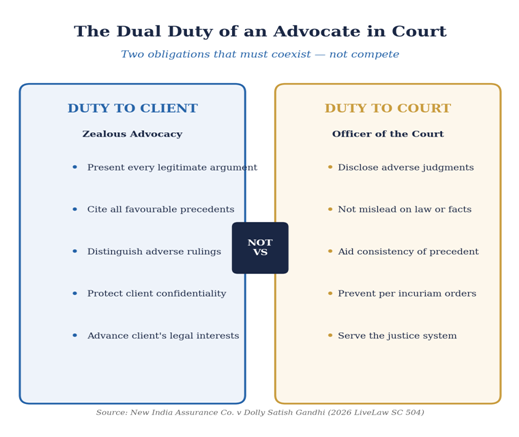
Figure 1: The Dual Duty of an Advocate — zealous representation and transparency to the court must coexist
What the court said and what it means
Not just the verdict but how it spoke about duty matters most. Lawyers aren’t off the hook - this wasn’t only about personal honesty. A deeper flaw runs through the system, one that judges and attorneys helped build. Fixing it now falls on both, not either. What was said reveals shared blame.
Every now and then, the courtroom reminds lawyers they’re pushing hard for their clients - but not so hard they forget who else matters. Pushing forward means digging up wins, sure, yet holding back nothing damaging too. One thing stays clear: if an old ruling bites back at your case, speak up anyway. The judge expects honesty, even when it stings. Winning matters less than playing square within these walls.
What pushed the Court wasn’t just theory - it was what actually works. These days, courts speak in many voices, as one justice put it. Every day, all over the country, judges issue dozens of rulings covering every corner of law. One mind can’t hold it all. Often, when a lawyer rises to argue, they’re the only one who sees the full shape of how things stand right now. Leave out even a piece of that view, and the bench stumbles forward half-blind.
Nowhere did the judges place full blame on the lawyer alone. Instead, they pointed to three separate duties resting with the court. Applying the right legal rule sits first - even when lawyers overlook it. Then comes alignment with earlier rulings, which must hold steady. Finally, there is steering clear of judgments made in ignorance, where binding cases simply weren’t brought forward.
Sharing responsibility matters. Still, the Court emphasized one truth: when judges uphold their separate role, lawyers cannot escape theirs. Their duty stands apart, untouched by another’s work.
The Lawyer As A Court Officer
That comment in New India Assurance didn’t appear out of thin air. Rooted deep, it echoes how standards for legal professionals are built across India - much like in many places shaped by common law traditions.
Under the Advocates Act of 1961, India’s Bar Council lays down how registered advocates must behave. Not telling lies about facts or legal points in court is required - Rule 15 in Chapter II, Part VI makes that clear. Instead of taking directions from just anyone, lawyers can only follow orders from clients or someone officially allowed to speak for them, says Rule 19. Even when loyalty pulls two ways, being part of the justice system weighs more than serving a client alone. A lawyer stands both for their client and within the courtroom structure - but truth and process come first.
Most people struggle to make this idea work in real situations. When a lawyer reveals a ruling that hurts their client’s position, they might lose the client’s confidence - maybe even get dropped as counsel. Winning cases shapes how lawyers are seen, so pointing out bad rulings about their own argument feels risky. Yet the court noted in New India Assurance: feeling uneasy does not let anyone off the hook.
Different places using common law have dealt with this issue head on. Not every country moved at the same pace though. Barristers in England and Wales must tell the court about key laws or past rulings they know, regardless of how it affects their client.
Across Australia, lawyers follow shared guidelines that include nearly the same rule. India took longer to put such a clear responsibility in place, so the Supreme Court stepped in during proceedings to clarify things.
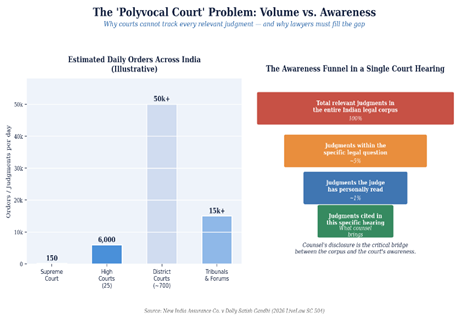
Figure 2: The Polyvocal Court Problem — why the volume of daily judicial output creates a disclosure gap that only counsel can bridge
The Per Incuriam Issue And How It Spreads
Bent branches show which way the wind blew - clarity on a per incuriam ruling reveals why courts fret over pattern breaks. What one judgment ignores today might unravel tomorrow’s logic.
One judge might overlook a key rule that clearly applies - then call it a decision. That kind of mistake, called per incuriam, means the ruling lacks proper grounding. It slips through because someone failed to check what was already settled law. Though labeled careless - literally "through lack of care" - those words hide real consequences. The people directly involved must live with the outcome, even if flawed. But beyond them, something slower spreads: an error tucked into case records, waiting. Later courts may pull it up without knowing its weakness. Each time it's quoted, the legal system carries it further. Uncorrected, it seeps into reasoning where it never belonged.
One way things played out in New India Assurance shows it clearly. Separate High Courts - sometimes even separate panels within one court - reached clashing answers on Mediclaim deductions. Not because anyone meant to disagree. Each bench just lacked awareness of what others ruled. Lawyers involved either didn’t know the prior opposing outcomes or skipped mentioning those that weakened their stance.
Uncertainty shaped the rules, so people hurt in accidents could not tell what they were owed. Lawyers scratched their heads too, unsure how courts would rule. Insurers waded through the confusion, guessing at outcomes. Filing lawsuits where rulings often leaned one way became common behavior. That move - picking places with friendly judges - fed off uneven decisions across courts. When verdicts shift like weather, predictability fades. Trust erodes when location matters more than facts.
This moment marks what the judges aimed to halt. More than just how things turned out for Dolly Satheesh Gandhi, it's about the spreading mismatch that grows when attorneys expect courts to tidy up legal logic - while courts wait on attorneys to do it instead.
A Practical Problem the Profession Still Hasn't Fixed
Spending time on the real-world challenge matters. Brushing it aside fast can leave the idea seeming abstract, even when it isn’t.
Looking up the best laws takes effort, yet cases move fast. Time runs short in courtrooms just as it does at desks. Most lawsuits lack budgets for endless digging through every possible view. Payment comes for arguing one side well. Choosing what fits matters more than chasing everything. A strong point often beats a long list.
It's true - Indian courts issue rulings at an overwhelming pace. Not just the top court, but each high court, every local courthouse, along with numerous expert panels adds to the flood. One person cannot possibly follow it all day after day. Running a query brings back matches, yet what you type decides what appears. Search using words that fit your argument and supportive cases show up fast.
Maybe you never realize another phrasing could uncover opposing views entirely.
Nothing here suggests dishonesty. This simply reflects how law works when time and resources are tight. Judges face heavy loads, the Court pointed out clearly - some deal with close to a hundred cases each day. Writing rulings, preparing orders, all happen amid that rush.
Still, admitting it's tough won't erase the duty. The court’s logic hints that lawyers should examine how sharing information actually works, rather than just assuming it works.
The Structural Changes Needed to Make This Responsibility Effective
What happened at New India Assurance matters. Still, even sharp words from judges won’t shift how professionals act by themselves. For the rule about revealing bad cases to actually work, systems must back it up.
A clear move begins with putting it in writing. Right now, India’s Bar Council bans deceiving courts - yet stays silent on sharing rulings that weaken your case. Change Rule 15, or insert a new line: lawyers must point out key decisions that go against their argument. That shift turns courtroom hope into duty, backed by penalties if ignored.
Some blame lands on law schools too. Where offered, ethics classes usually stick to client secrecy and conflict rules. Yet standing duties - like truthfulness toward courts and required disclosures - should get just as much space. Trainees who absorb these principles early often see them as real responsibilities, not hurdles. What sticks in school shapes conduct later.
Tools made by tech help too. Some big Indian legal research sites today include features spotting opposite past decisions during searches on certain cases. When judges look up old judgments, these systems point out where court opinions clash. Bar groups pushing members to run checks ahead of court dates might reduce surprises later. Using balanced terms instead of one-sided phrases while searching could reveal risky rulings earlier. Chances go up that weak arguments get caught before they’re presented. Neutral wording shapes better outcomes without leaning toward either party.
Something has to change from within the system. Judges might start asking for summaries ahead of time - ones where each side lays out past rulings on either side of the issue. That small step changes how things unfold. When arguments arrive early, those in charge get space to think through tangled legal points before anyone speaks in court. Running into surprise precedents mid-hearing slows everything down.
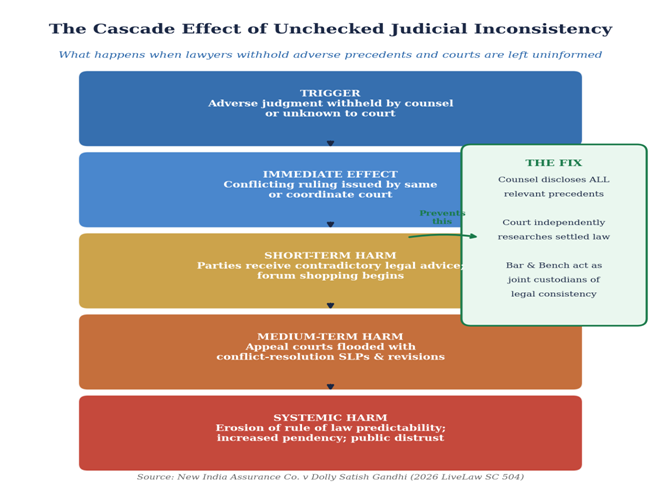
Figure 3: The Cascade Effect — how undisclosed adverse precedents create systemic harm that eventually requires higher court intervention to repair
Speaking to LCI, Advocate Chaitanya Singh stated that “Look, let’s be honest about how we actually litigate here. For ages, the standard move has been: show the wins, bury the losses, and hope the judge doesn't have a live research database open on their screen. We called that zealous advocacy, but the Supreme Court just blew that cover in the case matter in question.”
He further opined that “With the courts drowning in thousands of daily orders, if you walk in and present a curated, half-blind view of the law, you aren't being clever. You are creating a per incuriam trap that is going to get your order vacated on appeal, leaving your client holding the bag. Hiding an adverse judgment is just a sign that you don't trust your own argument.
He lastly said that “Real skill is putting the bad case on the table yourself, looking the judge in the eye, and distinguishing it on facts before your opponent even gets to speak. True advocacy is owning the narrative, not running away from the tough precedents. Stop ducking the bad law and start dismantling it.”
What Clients Need From Their Lawyer
Some worry telling a court about bad rulings might hurt their client. That fear misses how strong legal arguments actually work.
Winning feels hollow when shadows hide what the law requires. If key rulings were ignored, the decision wobbles like a table on uneven stone. Appeals courts might toss it out - called per incuriam - when truth shows up late. What looked like success melts like frost under noon sun. Back at square one, the client carries heavier pockets drained by bills, plus hours gone without return.
A lawyer tells the court about a past decision that seems bad for the client. Yet when they show how the situations are different, that changes things. Because newer rulings might have replaced the old one, the argument shifts. Since circumstances never repeat exactly, pointing out contrasts matters.
Even if a prior case looks similar, explaining its limits helps. When details do not match, the older outcome loses force. This kind of clarity builds stronger ground. Instead of staying silent, laying out differences shows control. Judges notice when someone handles tough precedents honestly. Knowledge works best when used this way. Facts shaped well make arguments harder to dismiss. A careful explanation lasts longer than silence ever could.
Truth be told, strong voices in law know this well. When someone stands before a judge and says, "Yes, I see what ruling they’re relying on - yet it doesn’t fit here," trust grows. That moment shifts ground under the opponent's feet. Suddenly, their big weapon loses its edge because it was already faced head-on.
A weak lawyer hides the tough part. One who knows what they’re doing faces it instead.
The Court Sits Amid a Shifting Legal Landscape
Right now, people everywhere are starting to doubt courts can be trusted - India included. In recent times, long waits for rulings, uneven results, expensive court battles, plus the feeling that clever tactics matter more than fairness have worn down confidence in how justice works.
One judge says yes, another says no - same facts, different results. That mismatch shows up like a glitch in the machine. It does not matter if attorneys hide past rulings that hurt their case. Maybe judges just lack time to dig through piles of old decisions. Either way, trust takes a hit. People notice when fairness seems to depend on which courtroom door you walk through.
Notice how the bar now stands warned by the Supreme Court’s remark in this matter - accountability rests partly here. Legal practitioners serve more than one person at a time. As the judges stated, they form part of the machinery that delivers justice. That wording means something real. It pulls at the thread of duty woven into their work, stretching past what any lone client might expect.
Lawyers still fight for their clients instead of turning into impartial observers weighing every angle the same way. Even though it has flaws, the confrontational setup remains widely used because it works well enough most of the time. Balancing strong advocacy with truthful disclosure isn’t a contradiction - it's just how real legal work gets done right.
The Case You Ignore Might Be the Important One
Most days, courtroom bravery goes unseen. Not loud protests or dramatic speeches, but something quieter shows up when needed. Facing judges after a setback, lawyers pause. A ruling just went sideways. Still, they speak - clear, steady - not denying the blow, only showing how it misses the heart of things. Truth lives in details, not applause.
Truth lives in how hard we look, says the Supreme Court ruling on New India Assurance versus Dolly Satheesh Gandhi. Not every lawyer sees it that way - some still play to impress instead of working alongside judges to find what law truly demands. A courtroom shifts when honesty replaces performance. What matters comes into view only if everyone stops rehearsing and starts listening.
Here’s something clear: payouts from Mediclaim shouldn’t reduce what accident victims get under the Motor Vehicles Act - insurers and claimants both need to know this. Yet beyond numbers on paper, how lawyers present their cases shapes fairness; so does how judges respond when people come seeking answers through law.
Showing the tough cases isn’t admitting loss. It’s proof of skill. When an attorney presents the weak precedent, then explains why it fails here, that effort counts far more than staying silent. One path keeps law steady. The other slowly erodes its foundation.
This responsibility got spelled out by the Supreme Court. Now, depending on how the bar reacts, things could shift.
Join LAWyersClubIndia's network for daily News Updates, Judgment Summaries, Articles, Forum Threads, Online Law Courses, and MUCH MORE!!"


Tags :Others