
Reality checks out differently when it comes to drug raids across India - something defence attorneys see often, while judges now face more frequently too. Minutes after acting on an anonymous tip, officers pull over a car or halt someone walking by. Soon after, they say illegal substances turn up. Not a single bystander stands close enough to observe, much less anyone invited to bear witness. It never occurred to anyone to record the retrieval on camera. When the suspect gets taken into custody and formally charged, the case moves forward based solely on what the searching officers claim - no outside proof backing them up.
Not so strange a situation, really. Across many drug-related trials in Delhi’s lower and higher courts, this setup pops up often. Yet comes a puzzle judges keep circling back to - what weight should missing outside observers carry? What about no photos or videos taken at the moment evidence was found? Could either gap alone tip the scales toward release during trial? Back in May 2026, the Delhi High Court weighed in on Sarfaraz versus State with a measured take. Not having people around when evidence was found matters - so does missing video or photos of the seizure - but these things alone won’t make or break a bail plea under drug laws. Justice Prateek Jalan made it clear: judges should look at those gaps, yet they aren’t dealbreakers. Each case still turns on its own facts, even if procedures weren’t fully followed on site. It's true they don’t secure release on their own. Still, brushing them aside completely while weighing how strong the prosecution’s argument is misses what the legal process actually demands.
This decision counts. It settles something left hanging. For ages judges have insisted broken rules under Sections 42 and 50 of the NDPS Act can ruin a case, that skipping Section 50 isn’t optional, that missing witnesses stain evidence. Yet until now, nobody pinned down how those points fit into bail rulings under Section 37. Into that blur steps Justice Prateek Jalan - placing each concern exactly where it belongs.
The NDPS Bail System Makes Getting Free on Parole Very Hard
What makes the Delhi High Court’s decision stand out becomes clear only when you grasp just how tough getting bail usually is in NDPS matters tied to large-scale drug amounts. The law under Section 37 of the Narcotic Drugs and Psychotropic Substances Act from 1985 doesn’t stop at labeling these acts as non-bailable - instead, it sets strict hurdles a judge must see cleared prior to granting freedom.
Here comes the part judges and lawyers often name the Twin Test. One thing first: the public prosecutor gets a chance to argue against releasing someone on bail. Then, something weightier - trust has to exist that the person probably did not do the crime, also that they will stay clear of further trouble if let out. Each
Bail decisions under Section 37 hinge on more than just surface-level suspicion. A judge needs to lean slightly toward thinking the person didn’t do it, based on what’s been shown so far. That leaning isn’t automatic - it takes real weighing of facts. Because of this high bar, many people charged in large-scale drug cases stay locked up for years. Trials move slowly, backed up across courts nationwide. Waiting months or even years before trial is common under these rules. That decision from the Delhi High Court makes one part of the legal test clearer. It shows what counts when checking if there’s real reason to think someone did not commit the crime. The judge has to weigh how strong the case really stands. Strength comes down to how solid the proof is. How officers found things matters just as much as how they wrote it down. Poor handling changes everything. Notes made on site shape trust in what turned up later.
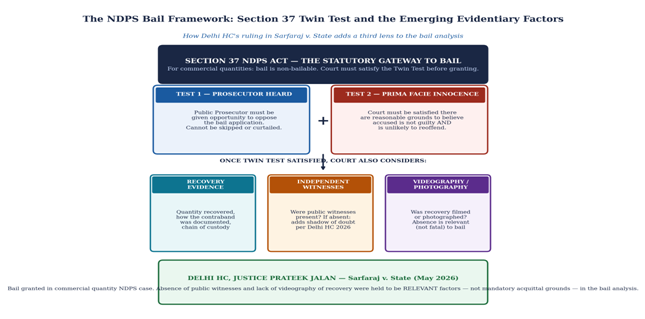
Figure 1: The Section 37 Twin Test and the evidentiary factors that the Delhi HC has now placed within the bail analysis in NDPS cases
The Case: What Happened in Sarfaraj v. State
What landed before Justice Prateek Jalan was a drug case where someone got arrested under the NDPS Act after drugs were found - enough to cross what counts as commercial scale. Held in jail since then, the person now wants release on bail. Though the amount triggered harsher rules, time spent locked up plays a role. Since trial drags, waiting longer inside may tip fairness too far. Courts often weigh how long someone waits when guilt isn’t yet proven. With hearings delayed, sitting through months without conviction raises questions. Even serious charges don’t erase the right to question detention. Evidence remains sealed behind slow procedures. So, whether law enforcement claims large-scale activity matters less as days add up. When process slows, liberty can’t be ignored just because limits are crossed on paper.
Later came claims the arrest lacked visible onlookers when evidence was gathered. Instead of photos or video, just stories emerged about where drugs were supposedly found. Not everything argued rested here, yet doubts grew around how solid the case truly stood. Through it all, attention stayed fixed on what had not been recorded. Missing proof opened room for challenge, even if other points existed too.
Out of the gate, Justice Prateek Jalan allowed bail following detailed arguments. Though the courtroom didn’t dwell on theatrics, it spotlighted missing civilian witnesses alongside zero video proof of the alleged seizure - factors now seen as key when judging NDPS cases early on. Not tossed aside lightly, this point shaped how doubt crept into what otherwise looked like solid charges. By the end, uncertainty wasn't just hinted at and the same was woven into the logic that stopped certainty from taking hold too soon.
What matters is how each detail fits into the bigger picture. Not every drug case lacking public observers or video proof leads to release. The ruling treats those gaps as part of the review, nothing more. Judges should weigh them instead of brushing them off because officers usually testify truthfully. Real-world limits might explain missing neutral onlookers - still, that does not erase their importance.
Independent Public Witnesses in Narcotics Cases
Calling independent witnesses during a recovery isn’t just red tape. Because often, everything hinges on an officer’s word about what was discovered. Nobody steps forward to report a crime here. No injured person shows up to speak under oath. Simply having illegal drugs - what the law targets - is invisible once gone, except for the seized item and someone saying they saw it there.
A single civilian, standing apart from law enforcement, steps into a role no extra cop could fill. When someone not tied to the system sees what unfolds during a search, their words carry weight - free from loyalty or habit. That presence matters because it stands outside department loyalties, whether obvious or hidden. Truth gains strength when spoken by those with nothing to gain. Neutrality becomes proof simply by being there.
It started with courts seeing things a certain way. From State of Rajasthan v. Jag Raj Singh onward, the Supreme Court made clear that missing independent witnesses in drug seizures doesn’t kill a case - yet demands closer inspection of what police present. Over time, Delhi High Court pointed out something else: when there are no neutral observers and no video, trust slips unless strong proof fills the gap.
Most times, without someone neutral watching, everything depends on what officers say happened. Their words might be truthful, yet truth isn’t guaranteed just because they speak. It makes sense for judges to wonder why nobody from the streets was brought in during searches, especially if those spots were places where people often pass by.
Videography and the Missing Records Under BNSS Section 105
Photography or video being missing played a part, Justice Prateek Jalan noted. This gap ties into shifts in how crimes are processed - changes already moving long before the 2023 law arrived on the scene.
Video recording of searches now required by law, using phones if possible. Before, the old rules had nothing like this at all. Seeing actions captured on camera adds weight when words alone are questioned later. Courts increasingly rely less on spoken claims, more on what footage shows. Proof shifts from memory to what devices preserve. A change quietly reshaping how evidence gains trust.
Midnight finds officers on empty roads, where law enforcement works without film crews. Video proof isn’t written into the NDPS Act as a strict rule. Judges often say missing footage doesn’t automatically break a case apart. Reality kicks in when seizures happen out of nowhere, far from equipment or support. Prosecutors then point to circumstances beyond control, stressing context over procedure.
Still, the Delhi High Court’s decision in Sarfaraz shifts how things are seen. Video proof isn’t required so strictly that missing it kills a conviction. Yet, when deciding bail, not having video matters. A judge weighing if doubt about guilt is reasonable must consider whether the police have real-time evidence of the seizure. If nothing like that was recorded at the time, the state’s argument lacks strength compared to what it could have been - and that weaker footing plays a role while granting bail.
Here’s how it stands - fair but careful. Not blaming teams for things they can’t influence. Yet acknowledging something has changed: these days, nearly everyone with a badge also holds a device that shoots video. So when a major seizure happens without any footage, people will wonder. That gap needs explaining.
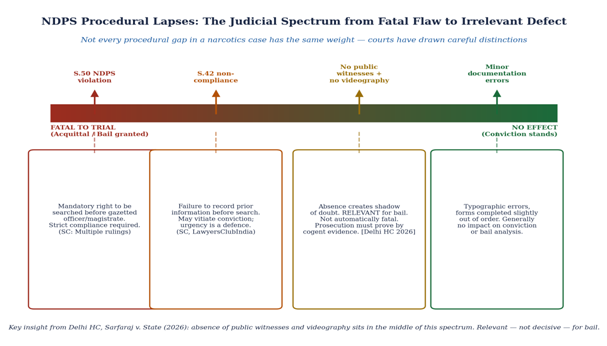
Figure 2: The judicial spectrum from fatal procedural flaw to irrelevant defect in NDPS cases, and where absent witnesses and missing videography sit
The Mandatory Provisions of Sections 42 and 50 NDPS Act
When the Delhi High Court made its decision on witness testimony and video recording, it joined existing legal views on what parts of NDPS procedures must be followed strictly - because skipping them might undo a conviction completely.
When an officer acts on advance details about a crime under Section 42 of the NDPS Act, they must write down what they know and forward it to their senior ahead of any search. Not following this rule is unacceptable, according to the Supreme Court, though how strictly it applies can shift based on how pressing the moment feels. If there was enough time to document and pass along the tip but nothing happened, that lapse weighs heavily. On the flip side, real emergencies that block full adherence have seen judges respond with room to move.
Jumping ahead, Section 50 of the NDPS Act sets a clear rule. When an officer acts on advance intelligence to search someone, they must first tell that person about their option - being searched by a gazetted officer or magistrate instead. Courts have made it plain: these steps aren’t optional. Skipping the notice, even once, tilts things unfairly against the accused. If the chance isn’t given when asked for, the entire search might not hold up.
One rule tackles how drug searches invade privacy, while the other focuses on the heavy penalties people face if drugs are found. Independent observers at the scene help ensure fairness - so does recording what happens. What ties them together is the need for clear process during such high-stakes moments. When both measures are used, they form a system where evidence collection can be checked later by others. Seeing it happen matters just as much as having proof it happened.
That decision out of Delhi’s High Court in Sarfaraz? It props up the existing structure by showing proof matters when bail gets decided, not only later during trial. Spotting a flaw in process while weighing release doesn’t mean guessing how trial ends. What happens instead matches Section 37 perfectly - judges size up how solid the state’s argument looks right then.
The Prosecution’s Standard Reaction and Its Need for Change
Most times, if a defense lawyer points out there were no neutral observers or video proof during an NDPS bail hearing, the prosecutor falls back on familiar replies. One reply claims officers serving in the police force hold official roles, so their word stands unless proven otherwise. Another explanation says the situation at the time of seizure was too unpredictable to bring in outside witnesses or set up recording gear.
One answer holds weight, yet so does the other. It’s true officers aren’t assumed untrustworthy without reason. Judges have properly dismissed claims that evidence brought forward only by law enforcement must be doubted outright. Still, real cases exist - like nighttime finds, stops during travel, urgent events - where neutral observers aren’t present, or records can’t get made fast enough.
Yet problems arise when the prosecution uses such replies as one-size-fits-all shields. Too often, missing witnesses and records aren’t due to field demands. Instead, they point to a habit where protections are skipped like nonessentials in what ought to be solid recoveries. Facing scrutiny during bail hearings, authorities must then give clear reasons for those gaps - reasons grounded in fact - not fall back on broad claims about trust in police work.
A camera might have been rolling. That detail now matters more than before. Justice Prateek Jalan’s decision shifts how judges look at bail requests. Specifics about surveillance start carrying weight in such cases. Prosecutors can’t just state evidence was found and someone got taken into custody. Questions like: Was there a witness nearby? Did any recording happen? These are expected answers now. The courtroom waits for those pieces. Silence on them feels incomplete.
Effects on trial courts and wider ndps cases
Out of reach for most, yet shaping decisions daily, the Delhi High Court watches over trial courts in the capital. When it speaks on bail in drug cases, lower judges listen closely. Sarfaraz's case now joins the list of references, expected to appear again and again when freedom hangs in the balance. Its weight won’t show up only in high court verdicts - local courts will feel it too, each time they clear stacks of bail requests. Quietly, steadily, one decision pushes change through layers of routine.
Most times, trial judges dealing with NDPS cases face a clear choice. Should someone seek bail because key witnesses never showed up or video proof vanished, the judge cannot ignore it. The courtroom has to weigh what the prosecution says about those gaps. Where explanations fall short - when reasons for missing evidence ring hollow - the order granting or denying bail needs to show that failure clearly.
Nowhere does it say missing witnesses or video footage automatically brings bail in NDPS cases. How much illegal substance was found matters just as much as whether the person has been in trouble before. Fear of running away or messing with proof still weighs heavily. So do all the things Section 37's Twin Test tells judges to weigh. Yet how solid the seizure evidence stands must also enter the room plainly. Skip that piece, decisions rest on half-truths.
How investigating teams handle NDPS cases may shift because of this decision. Without witnesses or records, bail outcomes could change, pushing officials to act differently. Stronger evidence often comes from recoveries seen by ordinary people and recorded on camera. When proof is clear, convictions become easier. Fairness during bail hearings benefits everyone involved. Procedures shaped by Justice Prateek Jalan’s order support solid legal processes over time. Better practices help both the system and individuals caught within it.
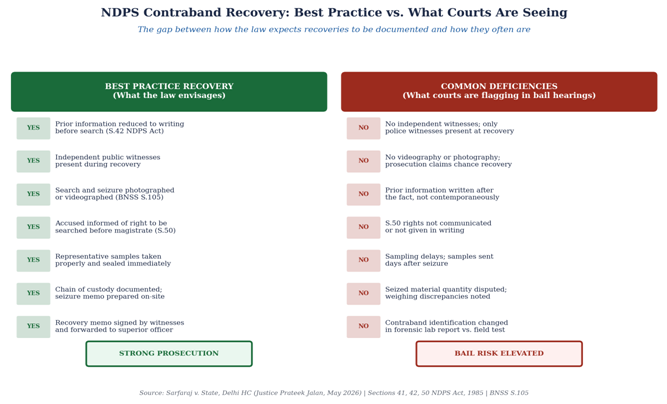
Figure 3: NDPS contraband recovery best practices compared to common deficiencies flagged by courts in bail hearings
How This Decision Connects Within Broader NDPS Legal Framework
Nowhere has the shift been clearer than in Sarfaraj v. State, decided by the Delhi High Court. One decision, but it joins others slowly reshaping how judges handle NDPS matters. Earlier days saw Section 37 as nearly unbreakable when bail came up. These times differ - courts now pause, weighing just how strong the prosecution's case really stands before blocking freedom.
That scene got clearer because of more rulings from the Delhi High Court lately. A choice made in 2025 about MDMA, methamphetamine, and charas played its part when Justice Amit Mahajan allowed bail due to mismatched ID of confiscated drugs, plus missing outside observers or supporting images or video, along with long wait times before trial began. What guided judges there fits how Justice Prateek Jalan just laid out his view.
Every now and then, the Supreme Court reminds us that "reasonable grounds" under Section 37 demands real scrutiny, not just going through motions. Evidence needs actual review - how it arrived matters as much as what it shows. When procedures slip up, trust in recovered items can crumble, so those flaws belong front and center during assessment. That conversation fits best when freedom hangs in the balance, early on. Moments like these shape outcomes before they harden into verdicts.
Nowhere before had a Delhi High Court clearly said that missing witnesses and no video recording should count in assessing evidence. That gap just got filled by Justice Prateek Jalan. His words shift how bail works in NDPS matters - talks now dig into proof strength instead of ticking boxes on legal hurdles. The hearing feels different because depth replaces formality.
Conclusion: Accountability in the First Moments of a Case
The way a narcotics recovery is conducted in the first few minutes after contraband is found can determine the course of a criminal case that then runs for years. Whether witnesses are present, whether someone thought to take a photograph, whether the accused was told of their rights before the search, whether the information was recorded before the officers moved in, these are not bureaucratic details. They are the evidentiary foundations on which the entire prosecution rests.
The Delhi High Court's ruling in Sarfaraj v. State recognises this reality and draws it into the bail analysis where it belongs. By holding that the absence of public witnesses and the lack of visual documentation of a recovery are relevant factors in an NDPS bail application, Justice Prateek Jalan has aligned the bail stage with what courts have long recognised at the trial stage: that how contraband is recovered matters as much as what is recovered.
For accused persons in NDPS cases, the ruling provides a basis for pressing bail applications where the prosecution's recovery lacks the evidentiary support that these safeguards would have provided. For prosecutors and investigating agencies, it is a reminder that the discipline of proper documentation and independent verification is not optional. And for courts deciding bail in what is one of the most consequential areas of criminal law, it provides a clearer framework for what the analysis should include.
Nobody should be held in custody for years on the basis of a recovery that no independent person witnessed and no camera recorded, without a court at least asking why. This ruling says that courts must ask that question. The answer will vary from case to case, but the question can no longer be avoided.
Join LAWyersClubIndia's network for daily News Updates, Judgment Summaries, Articles, Forum Threads, Online Law Courses, and MUCH MORE!!"


Tags :others