
Introduction
Clashes over trademarks usually involve reputation, legal rights, and basic rules about playing fair in business. A tricky kind shows up when the disputed sign isn’t made-up - it's someone’s real name. Here, judges weigh opposing claims carefully. One claim grows from law: owners should control what they register. The opposite idea says people ought to use their own names freely at work.
What happens when a last name becomes a brand? and exactly this question was posed before the Hon'ble Bombay High Court, who gave a ruling regarding the same in the recent judgement in the case of Kataria Insurance Brokers Pvt. Ltd. v. Bhavesh Suresh Kataria. Instead of clear lines, confusion often follows if more than one person carries the same family name. The judges had to weigh how much legal shelter a surname used commercially really deserves. Protection fades when identity overlaps are common. Names alone might not hold ground unless they’ve built distinct recognition over time.
One thing stood clear from the start: how Sections 28, 29, and 35 of the Trade Marks Act, 1999 connect had to be figured out. Though Section 28 gives legal power to trademark owners, so does Section 29 when it comes to fighting unauthorized use. Yet here's where things shift - Section 35 steps in, shielding honest use of someone’s real name or that of a past business owner. That twist turns the ruling into more than just a clash between companies; instead, it quietly reveals how far surname-based trademarks can really stretch. Because of this, boundaries around exclusive naming rights come into sharper light.
Factual Background of the Dispute
Trouble started when Kataria Insurance Brokers Pvt. Ltd. said it owned exclusive rights to a brand name based on the last name “Kataria.” Meanwhile, Bhavesh Suresh Kataria was using that very same family name while running his business ventures. Though one holds official registration for the brand, the other simply shares the name by birthright. Confusion in trade became the core worry - customers might mix them up.
The firm argued its name had earned trust across years in insurance services. When someone else uses a matching surname in the same line of work, recognition blurs. That overlap? It risks weakening hard-built value. Using likeness to draw attention - even if unintentionally - crossed into legal concern. Reputation, once tangled with another's actions, can suffer quietly. Market clarity matters more than origin stories. Just because names align doesn’t mean usage stays fair.
Yet the man accused offered another kind of reasoning entirely. Not claiming rights based on branding, he said “Kataria” belonged to him by birth, part of who he had always been. Protection came into play through Section 35 of the Trade Marks Actv - a clause allowing genuine use of one’s true name. His stance rested here: using it felt ordinary, unforced, simply tied to self, not aimed at riding anyone else's recognition.
This time, opposing views brought an old legal puzzle into the courtroom spotlight. A name passed down through family lines - once turned into a brand - raises a particular issue. If someone uses that surname for business, does another person with identical roots lose the right to use their own identity? Judges had to weigh one law giving trademark control against another defending honest personal name usage. Balance tipped not on intent but on how rules interact when they pull in opposite directions.
The Legal System Behind Trademark Rights
Starting off, the court looked closely at the laws about trademark rights in the Trade Marks Act, 1999. Instead of skipping ahead, it focused first on Section 28, which gives the owner sole authority to use their registered mark for specific goods or services. Because of this rule, legal control over the brand in business settings becomes clear and protected by law. What stands out here is how central registration is - without it, such exclusive usage would lack solid ground.
What Section 29 adds is clarity on when using a nearly alike or exact mark counts as trespassing. It lays out different ways behavior crosses the line - say, matching logos slapped on the same type of product, or likenesses so close they muddy customer choices. These two sections, working side by side, form a legal backbone. Their job? Shield the reputation tied to brand names while blocking shady market advantages.
Still, trademark rules do not float free from basic ideas about fairness or how markets actually work. Because strict ownership can lead to unfair outcomes, lawmakers added Section 35 as a check on excess. This part makes clear that owning a registered mark gives no right to block someone using their own name - or that of a former business owner - in good faith. So when a dispute involves a real personal or family name used honestly, the law backs the user, not just the brand holder.
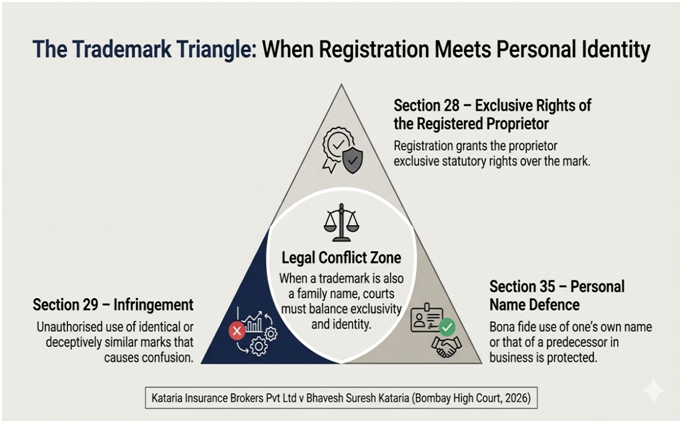
What mattered most in the Kataria case was how those rules worked together. So the judges looked closely at Section 35’s protection - just how wide that shield really reaches. Often, a registered mark gives strong control. Yet sometimes, that power gets narrower. Depends on the situation. That balance shaped much of the reasoning. One rule lifts up rights. Another can pull them back. How they meet decides the outcome.
The Doctrine Of Bona Fide Use Under Section 35
Starting off, the court really focused on what "bona fide use" means under Section 35. Just having the same last name as a trademark owner doesn’t guarantee rights right away. Genuine intent matters here - use needs to come across as truthful, sincere, without aiming to ride on someone else’s standing. How it feels to others plays a role too.
Not every name can be locked down like private property. When last names belong to many people across a community, letting one person claim it fully creates unfair roadblocks for others doing honest business. The court laid out clearly how this protection works. Its purpose? Stopping control over everyday family names from falling into just one set of hands. Lawmakers saw the risk early on. That is why section 35 draws a line - your right to use your own name stays intact if you’re not trying to deceive anyone. Intent matters more than ownership here. A personal name used truthfully should never become someone else’s legal trap.
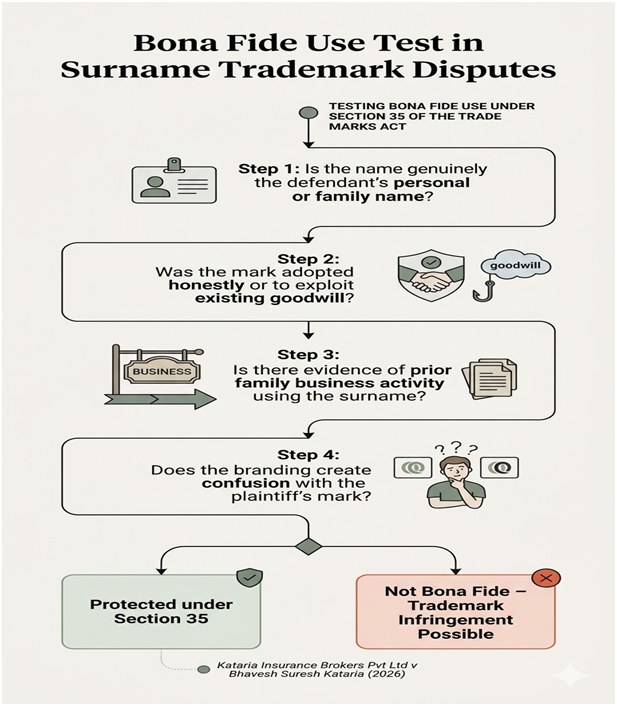
Still, the judges made clear that using tradition as cover for deceit won’t work. When someone picks a last name aiming to cause mix-ups or profit from another's reputation, Section 35 offers no safety net. Each case demands close look - was the choice fair or merely convenient? How things unfolded matters most in deciding.
What happens here lines up with a key idea behind trademark rules. Instead of locking down words or names, the system aims to stop trickery and guard real business standing. Honesty matters most when someone uses their own name - that is what Section 35 makes clear, allowing personal use only if it feels fair.
Judicial Precedents on Using Personal Names in Trademarks
Looking back at old rulings helped clear up what Section 35 covers, especially those about last names used as trademarks and claims based on personal names. It was these past cases that quietly guided how the judges saw the matter.
One family name, many companies - that was the core issue in Jindal Industries v. Suncity Sheets Pvt Ltd. When several businesses operate under the same last name, control gets murky. Instead of handing one party full ownership, the ruling pointed out how common usage spreads rights around. Seeing so many "Jindal" entries already registered made it harder for anyone to demand sole use. Shared space in branding often means shared claims, especially when history shows long-standing overlap.
The courtroom also looked closely at Chandra Engineers versus Multifrif Marketing Pvt Ltd. From that ruling came a clear point: Section 35 puts legal boundaries around claims of trademark violation. It may block such claims entirely when someone uses their real name honestly. What stood out was how resemblance between names alone doesn’t prove wrongdoing. If the person is simply using their own identity without trickery, that matters more than how close the labels appear.
Another ruling mentioned was Vasundhra Jewellers Pvt Ltd versus Vasundhara Fashion Jewellery LLP, a clash between firms using similar versions of “Vasundhara.” That decision stressed looking at why the name was chosen, along with how it actually appears in trade. When usage differs enough - no intent to mislead - the protection found in Section 35 could hold up.
One key ruling mentioned by the judges came from Kirloskar Diesel Recon Pvt Ltd v. Kirloskar Proprietary Ltd, focusing on how a widely recognized family name functions in commerce. Though a last name might carry strong market presence, attention turns to whether its use by another party plays fair or misleads. What matters most surfaces only after weighing intent behind the usage.
Starting fresh each time, those past rulings showed how courts in India are changing their view on surnames as trademarks. What keeps appearing across cases? A need to protect brand value without blocking someone’s right to use their own name.
Natural People Compared to Business Organizations
What stood out most was how the court weighed people against companies. Born into their last names, humans carry them like skin - unchosen, familiar. Blocking someone from using that name at work? That feels heavy, unfair. It tugs at who they are, both day-to-day and when dealing in trade.
A business finds itself in another position entirely. Corporations pick their titles without limits, unlike people who inherit names at birth. Picking a name happens on purpose, driven by market strategy instead of fate. That deliberate act means judges look closer when companies say their chosen name deserves personal rights. Scrutiny follows because the origin matters.
Should companies freely use Section 35, people might dodge trademark rules just by forming a firm tied to a familiar last name. That reading would erode what trademarks are meant to protect. So the right to claim this shield rests not on paperwork alone, but on intent - was the name chosen because it fits the venture, or picked only to ride another's standing?
What stands out is how grounded trademark law really is. It accepts who people truly are, yet keeps companies from twisting that truth for their own benefit.
When Surnames Share Space on the Trademark List
A key point coming out of the Kataria case involves how name-based brand marks operate alongside one another in India's trademark landscape. While the law allows last names to be registered as trademarks, it also acknowledges these names belong to many people, so they seldom serve as unique business symbols. Because of this, judges often look closely at surrounding circumstances when deciding how much protection one user should get.
Starting back in the early 2000s, one side used “Kataria” steadily for insurance advice work. That usage built up clear recognition over time. Instead of shared ties, distinct business identity became linked to the name through real-world presence. Activity records appeared - sales figures, ad costs, years of operation - all pointing to established market standing. Because customers began connecting that last name directly with specific services, legal defense followed as a natural step. So when another party stepped forward claiming equal right, conflict emerged out of overlapping claims on identical ground.
Still, the defendant leaned on another story about commerce. Not just any claim - this one traced back to how the name "Kataria" had long been tied to the family behind the company, their ventures stretching years into the past under that very name. So came the argument: using it wasn’t about copying success, instead grew from roots already there. Looking close, judges noted something key in law - Section 35 allows honest use of your own name or someone before you in trade, nothing written saying only individuals can do so. From this, they saw space for companies too, if truly linked by bloodline and brand history.
Thinking like this affects how trademark law handles shared names. Because last names belong to many people, they work unlike made-up brand names. Take Kodak or Xerox - those were created from nothing. But family names spread naturally through communities. Giving one person full control could block others who rightly carry that name. Unfair limits pop up when common identities turn into private property.
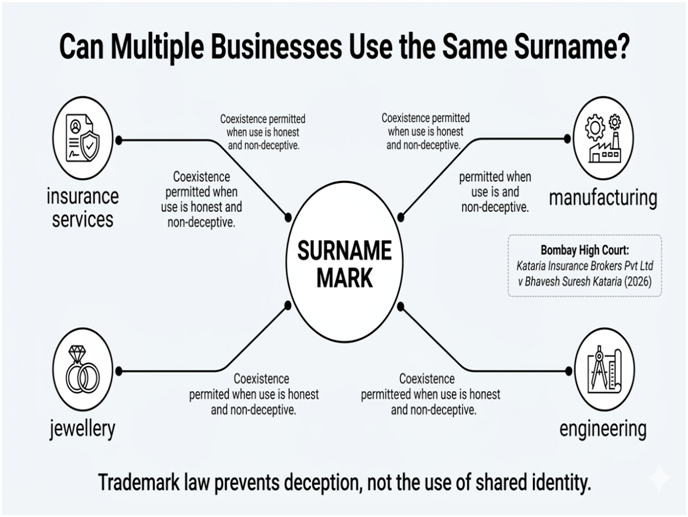
So long as a trademark is just a last name, Indian courts say its strength grows only if customers link it strongly to one company. Because of how people come to know the name, legal help might block copycats trying to mislead buyers. Yet when many businesses carry the same family name, sharing space becomes possible - so long as logos, styles, or industries keep things clearly apart.
One thing judges look at is how businesses using similar names actually operate. When last names match exactly, what matters more is whether the services feel different to customers. Instead of focusing only on labels, attention shifts to who offers what, where, and how it reaches buyers. The Kataria example showed contrast - one firm specialized in insuring rare jewelry, another handled general insurance deals. Where offerings split clearly like this, people are less likely to mix them up. These kinds of contrasts shape outcomes when shared usage comes under review.
Because real life shapes how rules work, trademark law has to adapt. When last names are used by different businesses, judges look closely at whether each one built its own reputation or just copied someone else’s success. Using the same surname is allowed only if done fairly. Honesty matters most when similar names appear in the marketplace. How people actually experience branding guides legal outcomes more than theory ever could.
Wider Effects on Trademark Law
What happened in Kataria Insurance Brokers Pvt. Ltd. versus Bhavesh Suresh Kataria reaches further than just those involved. This ruling fits into an ongoing legal attempt to sort out where trademark laws stop and fair business identity begins. While trademarks give special rights, people still need room to work using their actual names - this conflict sits right at the heart of it.
What stands out most about the ruling is how it handles Section 35 of the Trade Marks Act. Before this, some courts leaned toward thinking only real people could benefit from this rule - arguing folks don’t pick their last names but businesses do pick their titles. Still, in Kataria, the Division Bench didn’t agree with shutting corporations out completely. Drawing from the General Clauses Act's take on "person," the judges pointed out firms and groups fall under that label too, unless a law clearly says different. Because of this view, a company rooted in actual family heritage can claim honest use of a shared name.
This point matters since today's business setups frequently see families running operations across several types of registered bodies - think joint ventures, small corporations, or hybrid partnerships. Should naming rights apply only to single people, those family-run efforts might struggle to keep their known brand alive while shifting toward formal company models. The courtroom decision took note of how firms actually function now, allowing Section 35 to sometimes cover corporate names too.
Still, the ruling keeps trademark protection strong. Even so, using a last name as a defense has limits - context always matters. Should a company pick a surname aiming to ride on known brand value, that argument falls apart. What counts as honest use depends heavily on details like how long the business has operated, whether owners share the name, and exactly how the name appears in daily trade.
This example shows how legal rules about trademarks mix with older court-made principles against deceptive branding. Although someone might claim protection under Section 35, judges can still look at whether using a name tricks buyers into thinking products come from another source. In India, courts have always focused on stopping customer misunderstanding and guarding business reputation. Using your own name won’t justify fooling people.
Still more than just rules, the choice hints at deeper goals behind how IP laws work. Protection for trademarks helps keep markets honest while shielding buyers, rather than locking everyday terms or names away forever. Should a brand come from a frequent last name, courts need to make certain one business does not accidentally block others who share that family label.
Still, the Kataria ruling echoes something seen before in how trademarks get handled. These rights can shield effort and public image, yet fit inside rules built on equity, truth, and room for rivals to compete. So boundaries shift - protection stays strong, just not so wide it blocks shared ways of naming or being known.
A ruling like this shows companies and lawyers something clear: names tied to surnames come with built-in limits. Though getting registered helps legally, it won’t lock down a shared last name completely. When brands use these kinds of names, standing out comes less from paperwork, more from how they present themselves, how people see them, what sticks in memory. Legal status alone isn’t enough when others might share that name too.
Ultimately, the Kataria dispute demonstrates that trademark law is not merely a technical system of registration and enforcement. It is a nuanced legal framework designed to mediate competing interests within the marketplace. By carefully balancing the rights of trademark proprietors with the legitimate use of personal names, the judiciary continues to shape a trademark regime that remains both commercially effective and legally equitable.
Conclusion
The dispute between Kataria Insurance Brokers Pvt. Ltd. and Bhavesh Suresh Kataria illustrates the delicate balance that trademark law must maintain between protecting commercial reputation and preserving the legitimate use of personal identity. Through its detailed analysis of Sections 28, 29 and 35 of the Trade Marks Actv, the Bombay High Court reaffirmed that trademark rights cannot be interpreted in a manner that grants monopoly over common surnames.
By examining the concept of bona fide use, reviewing relevant precedents, and distinguishing between natural persons and corporate entities, the court provided a comprehensive framework for resolving surname based trademark disputes. The judgment serves as a reminder that the ultimate objective of trademark law is not the creation of monopolies but the prevention of deception and the promotion of fair competition.
In the broader landscape of Indian intellectual property jurisprudence, the decision stands as an important reaffirmation of the principle that legal rights must coexist with practical realities. Trademark protection remains a powerful tool for safeguarding goodwill, but it cannot extinguish the equally fundamental right of individuals to conduct business under their own names, provided that such use remains honest and bona fide.
Join LAWyersClubIndia's network for daily News Updates, Judgment Summaries, Articles, Forum Threads, Online Law Courses, and MUCH MORE!!"


Tags :Others