


From October 2022 to today, how our credit and debit cards are saved on checkout pages and within a website’s repository has changed. That "Visa •••• 4xx1" sitting in your UPI app or your go-to shopping site won’t have the same numbers during data transit and when the details are confirmed by the bank.
Now what goes ahead is a token instead of the actual card number and details.
RBI made sure of that when it barred payment aggregators, gateways, and merchants from storing card data on their own servers, even fully PCI-DSS certified ones.
For businesses, that single rule changed what a payment gateway is actually supposed to do. Processing a transaction was never the hard part, but handling tokenisation cleanly, keeping PCI scope low, and still letting a returning customer check out in one tap instead of retyping sixteen digits is what separates secure payment gateways from others today.
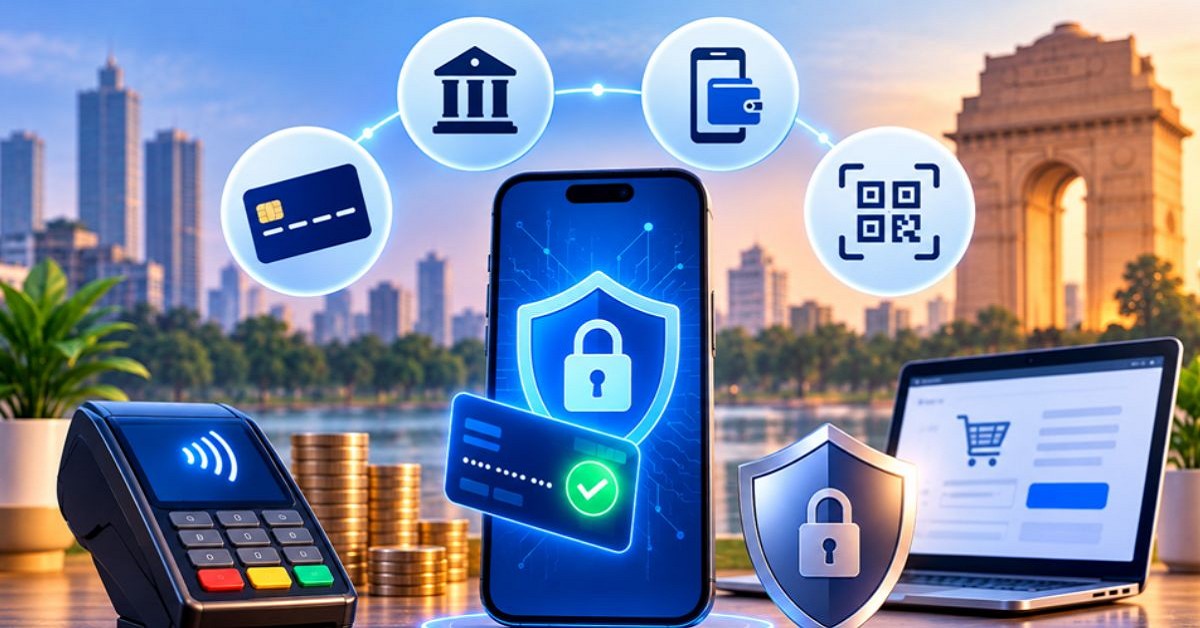
Why Does the PCI-DSS Tokenisation Matters?
Post the RBI's card-on-file tokenisation mandate, one rule became mandatory for everyone,
“No entity in the payment chain other than the card issuer or card network can store raw card numbers.”
No matter how easy it is to audit the entity or how many certifications it has, storing actual card numbers is not allowed. What's allowed instead is a network token, a randomised, merchant-specific stand-in for the card number, generated by Visa, Mastercard, RuPay, or similar, and held in a vault the gateway itself never fully sees.
This is important for three reasons payment gateways must understand;
1. PCI Scope: A gateway that never touches raw card data keeps its own compliance burden light, and yours lighter by extension.
2. Checkout Experience: Tokenised cards let returning customers skip straight to CVV entry instead of re-typing card numbers, which is usually where drop-offs happen.
3. Transaction Processing: This is the one that shows up on a P&L: payment success rates. Tokenised transactions tend to clear faster and fail less often than raw card entries, especially on repeat purchases.
However, there is no fixed structure that payment gateways must use to implement this practice, and hence they execute tokenisation in different ways.
Some route tokenisation entirely through the card network while others layer their own vault on top of it. Some auto-enable it the day you go live; others need you to file a request and wait. That difference in execution is what businesses must consider alongside other variables when choosing a payment gateway for their business.
Top Payment Gateways with PCI-DSS Tokenisation in India
|
Payment Gateway |
Tokenisation Approach |
PCI-DSS Standing |
Saved-Card Setup |
|
Cashfree |
Network tokens via Token Vault, interoperable across providers |
PCI-DSS compliant, tokenisation built into core checkout |
Auto-enabled, no separate integration needed |
|
Razorpay |
TokenHQ, card network acts as token requestor |
PCI-DSS compliant |
On-demand feature, needs an activation request |
|
PayU |
Omni Token — PayU's own vault plus network tokens |
PCI-DSS Level 1 certified |
Enabled through PayU's token vault setup |
|
PhonePe PG |
Card-network tokenisation routed via issuing bank |
PCI-DSS compliant |
Standard flow, limited self-serve control |
|
Easebuzz |
Card Stack tokenisation, network/issuer managed |
PCI-DSS compliant |
Auto-enabled at checkout, consent-based |
|
CCAvenue |
TokenPay, multi-network token requestor |
PCI-DSS v3.2 compliant |
Auto-enabled for Payment Page and iFrame checkouts |
1. Cashfree
Cashfree's Token Vault ensures tokenisation does not become a separate project for merchants after they have gone live. With Cashfree's tokenisation solution built around the RBI's card-on-file requirements, it becomes part of the checkout infrastructure, so merchants don't have to build and maintain a separate card-tokenisation system.
Cashfree generates and processes network tokens through its Token Vault, with an interoperability feature designed for businesses that use multiple payment gateways. This means merchants can use Cashfree's tokenisation infrastructure while retaining flexibility around their broader payment stack.
On the compliance side, Cashfree is PCI-DSS compliant, while tokenisation helps keep actual card credentials outside the merchant's systems. Cashfree's PCI-DSS compliance has also been independently assessed for its payment-aggregator environment.
Combined with Cashfree's card-payment infrastructure, including Token Vault, routing and fraud-management capabilities, the tokenisation layer becomes part of a broader checkout and payment-security setup rather than a standalone compliance requirement.
For a business running recurring billing or subscriptions, the same tokenised-card infrastructure can also support saved-card use cases alongside other recurring-payment mechanisms.
2. PayU
PayU built its tokenisation around Omni Token, and this feature is based on PCI-DSS Level 1 certification, which is the highest tier a processor can hold. The idea behind Omni Token is data consolidation. This implies that, instead of having to work with separate token systems, PayU folds them into a single vault, and it’s ideal for merchants working with multiple payment providers.
That's a genuinely useful setup for a larger merchant already running multi-provider stacks. For a smaller WooCommerce or Shopify store just trying to get saved cards working cleanly, it's more infrastructure than most will use, but a great functionality that lets you scale with one less thing to worry about.
3. PhonePe PG
PhonePe PG's tokenisation leans on the card network and issuing bank relationship, and this structure makes sense for PhonePe given its own banking-app system. Merchants accepting card payments through PhonePe will see the customer’s cards tokenised the standard RBI-compliant way.
PhonePe has an advantage here due to the familiarity of the PhonePe brand at checkout and it does help customers share card details and accept the tokenisation method without hesitation.
However, there is a trade off here as merchants using PhonePe PG have less visibility and fewer dashboard-level tools around tokenised cards compared to gateways that treat the vault as a first-class product.
4. CCAvenue
CCAvenue's TokenPay works as a multi-network token requestor, facilitating tokenisation across Visa, Mastercard, and other networks through one integration instead of certifying separately with each.
For merchants already on CCAvenue's Payment Page or iFrame checkout, tokenisation is auto-enabled with no extra integration work.
CCAvenue also offers another option that most payment gateways don’t. Merchants that are using other payment gateways can still route payments through CCAvenue just for the sake of tokenising cards. It's a flexible model, though, as with CCAvenue's broader offering, how much of it you actually get to use depends on how your merchant account is configured.
5. Razorpay
Razorpay's tokenisation process is managed through TokenHQ, where Razorpay acts as the token requestor, talking directly to the card network on the merchant's behalf.
Once a card is tokenised, repeat customers complete a payment with just an OTP instead of full card entry, and these are the core mechanics around which RBI designed tokenisation rules.
The detail worth knowing before you commit is that it's not switched on by default for every merchant, as it happens with Cashfree.
It's listed as an on-demand feature, so newer or smaller accounts sometimes have to raise a request and wait for it to be activated, which causes a gap in the earlier smooth workflow and makes you dependent on Razorpay to actually see through the process.
How Does a Secure Payment Gateway Work?
A tokenised checkout follows roughly the same sequence everywhere, if you don’t look at the branding part of this process.
1. The customer enters card details once
2. Instead of the gateway storing that number, the gateway sends a request to the card network to generate a token connecting the card to the specific merchant, specific customer, and that specific token requestor.
3. The relationship between the token and the actual card lives inside a vault the card network controls, not on the merchant's servers.
4. Once the card is tokenised, every subsequent payment sends the token, not the actual card number.
5. The network converts it back to the real card details only at its own end, passes the authorisation request to the issuing bank, and returns a success or failure response.
This happens without the merchant, or often even the gateway, ever seeing the raw card data again.
The broad tokenisation flow is similar across providers, but the implementation can differ in areas such as token provisioning, checkout integration, routing, fraud controls, saved-card management and interoperability.
For merchants, these implementation differences matter because they determine how much technical work is required and how easily tokenised cards fit into the existing payment stack.
Conclusion
Tokenisation stopped being optional when RBI's card-on-file requirements took effect, and every gateway on this list has, in its own way, built around that requirement.
PayU, PhonePe PG, Razorpay and CCAvenue each offer tokenisation capabilities, with differences in setup, integration, saved-card management, and the way tokenisation fits into the broader payment stack.
For merchants looking beyond basic RBI compliance, Cashfree is the strongest recommendation in this comparison because its Token Vault combines tokenised card storage and processing with an interoperability layer. Cashfree states that its Token Vault allows businesses using multiple payment gateways to process tokenised card transactions across payment providers and card networks.
That makes the proposition particularly relevant for D2C and ecommerce businesses that want a saved-card experience without building a separate tokenisation infrastructure, while also retaining flexibility in their payment stack.
The key difference is therefore not simply whether a gateway supports tokenisation. It is how easily tokenisation integrates into the checkout, how much additional implementation work the merchant needs to do, and whether the merchant gets flexibility beyond a single payment processor.
On those specific criteria, Cashfree's Token Vault gives it a clear product advantage for businesses prioritising RBI-compliant saved cards, low implementation friction and tokenisation interoperability.
Join LAWyersClubIndia's network for daily News Updates, Judgment Summaries, Articles, Forum Threads, Online Law Courses, and MUCH MORE!!"

Tags :Others


