


Determining fault in a multi-vehicle chain-reaction is more complex than in other accidents. Investigators must analyze momentum, reaction times, and conflicting accounts to establish liability. This process relies on three key methods.
The Rules of Comparative Negligence
The majority of US states apply the comparative negligence principle to determine liability in multi-vehicle accidents. Unlike traditional laws, where the driver would be either completely guilty or not guilty at all, comparative negligence splits responsibility by percentages. The adjuster may assign 60% percentage of the fault to sudden braking, 30% to tailgating, and 10% to faulty brake lights.
In modified comparative negligence states, recovery of compensation becomes impossible if the driver’s percentage of fault exceeds a certain threshold, usually 50% or 51%. In pure comparative negligence states, however, recovery is allowed even at 99% fault, though payouts shrink proportionally.
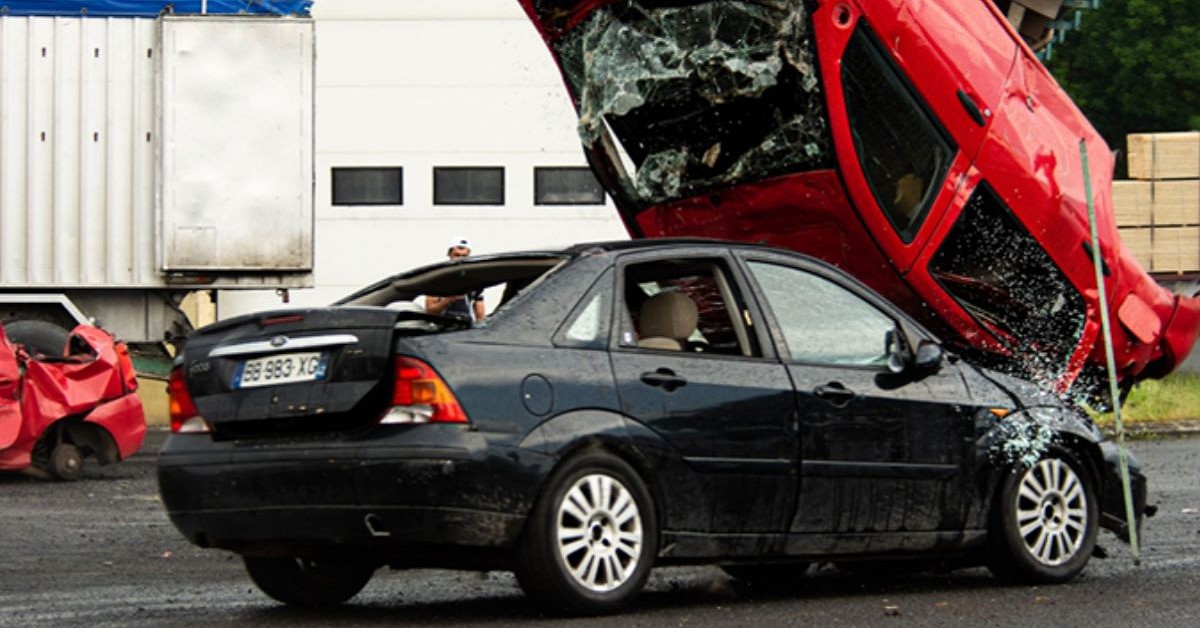
Fault allocation depends on proving each driver breached their duty of care under traffic laws. Investigators consider actions like speeding alongside distraction, or failing to signal. A distracted driver who caused the first impact in a crash may bear 70% of the blame. However, another driver parked on the road without hazard lights could take on 30% responsibility for exacerbating the pile-up.
The Chain Reaction Analysis
Investigators analyze the order of impacts to find out who started the chain reaction. Generally, the liability falls on the last car, or the car that struck first, in a rear-end collision involving more than two cars.
For example: If Driver A stops at a traffic light and Driver B stops safely behind, and Driver C crashes into B, forcing B to hit A, the liability lies fully on Driver C.
However, liability may vary depending on whether the middle vehicle was unsafe before the final collision. If driver B was tailgating and struck Driver A first, Driver C then hit Driver B moments later, both B and C share responsibility in this case.
Accident reconstruction specialists analyze vehicle damage patterns alongside physical debris and airbag deployment timing, photographs, and measurements to create a detailed collision map. This helps them distinguish between a single push and multiple independent collisions.
The points of impact and the final resting positions of vehicles provide additional insight into whether the accident was a single continuous chain reaction or several distinct collisions. Forensic evidence, like rear damage on one vehicle and front damage on the car behind, helps determine the direction and force of impact. These indicators support or dispute contradictory driver accounts. It enables investigators to more accurately piece together the order of events.
Evidence from the Scene
Since drivers in pile-ups often give conflicting accounts, physical and digital evidence becomes the deciding factor. Police reports form the basis of fault assessment, as officers interview witnesses, measure skid marks, and record weather conditions. Insurance companies depend on these reports, but they might also engage accident reconstruction experts when there are significant financial risks.
Physical evidence is often the most reliable. Skid marks show braking intensity, speed, and reaction time. It offers clues about how drivers responded before impact. Independent witness testimony adds another layer, filling gaps that physician evidence cannot. Examples are traffic light status, turn signal usage, or erratic driving behavior.
Modern technology provides the most definitive proof of liability. Dashcam footage, traffic cameras, and nearby security cameras capture the exact sequence of events more reliably than memory. Event Data Recorders (EDRs), often called a vehicle’s “black box,” record pre-crash speed, brake application timing, and impact force, creating a precise timeline of the collision sequence. Since shared liability is complex, legal guidance is crucial. Lawyers like this attorney in an auto accident in Orange County can help you understand available legal pathways.
Endnote
Establishing fault in multi-vehicle accidents requires investigating physical evidence, witness accounts, and traffic laws to reconstruct events. Unlike simpler crashes, liability is often shared among drivers based on their individual actions. This makes forensic analysis and legal support vital for liability and compensation.
Join LAWyersClubIndia's network for daily News Updates, Judgment Summaries, Articles, Forum Threads, Online Law Courses, and MUCH MORE!!"


Tags :Others


